NCP (SP) Overhauls Its Media Team
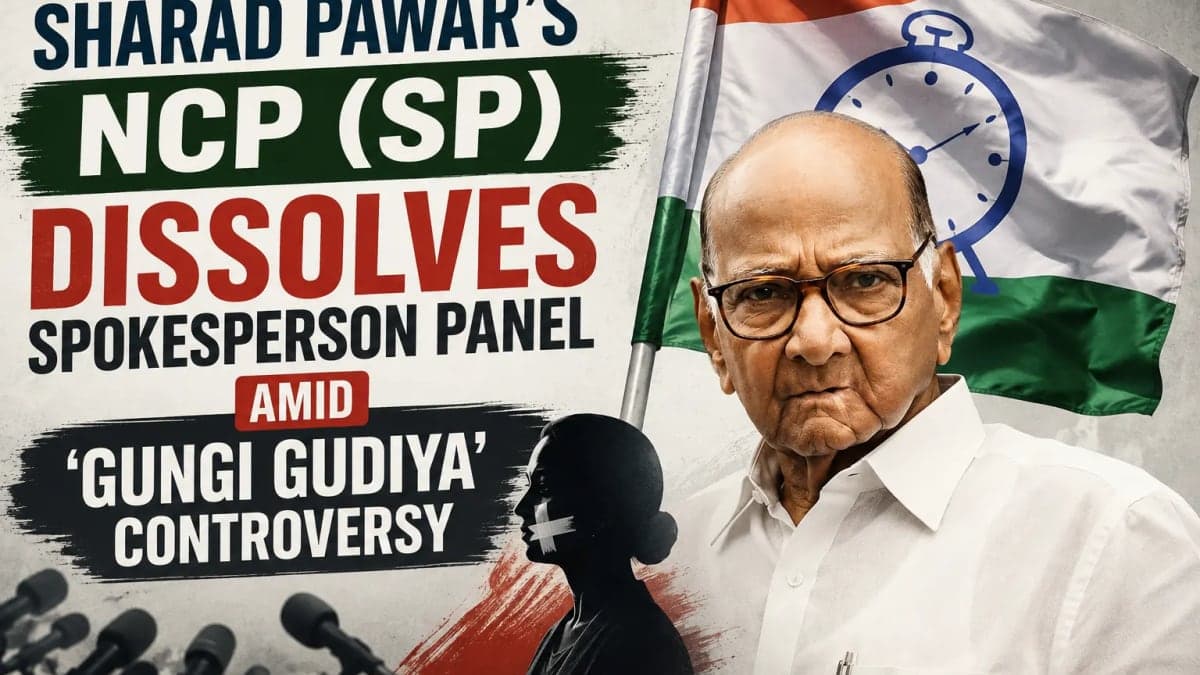
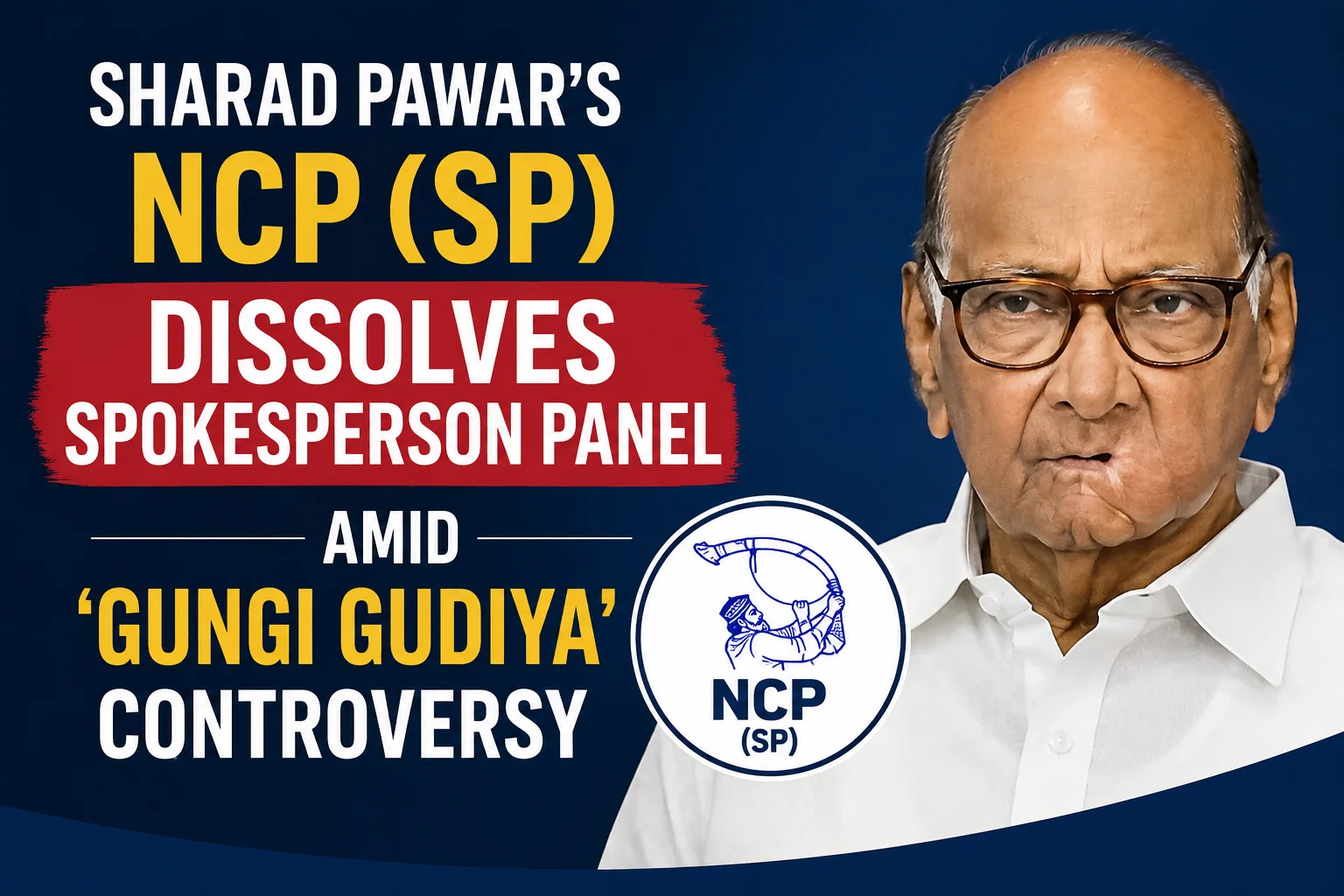
The Nationalist Congress Party (Sharadchandra Pawar), led by veteran politician Sharad Pawar, has carried out a significant restructuring of its media operation by dissolving its existing spokesperson panel.
The decision removes the current spokesperson appointments with immediate effect and comes as the party conducts a wider organisational review in Maharashtra. Reports indicate that the dissolved panel had 22 members.
For the time being, former MLA Vidya Chavan and Mahesh Tapase have been authorised to represent the party before the media until further instructions are issued.
The move effectively centralises the party's public communication at a politically sensitive moment.
Decision Comes Amid ‘Gungi Gudiya’ Row
The reshuffle has attracted particular attention because of its timing.
Maharashtra politics has been witnessing a controversy over the phrase “Gungi Gudiya”, or “mute doll”, used against Maharashtra Deputy Chief Minister and NCP president Sunetra Pawar. The remark drew strong criticism from her party and triggered an escalating confrontation with the Congress.
NCP workers also disrupted a Maharashtra Congress press conference amid protests over the comment, demonstrating how rapidly the dispute had moved beyond verbal exchanges and intensified friction between the parties.
However, the spokesperson restructuring should not automatically be interpreted as a direct disciplinary response to that controversy. Reporting on the decision also points to a broader organisational review within the Sharad Pawar-led party.
Why Removing the Spokesperson Panel Matters
Spokespersons play a particularly important role during politically volatile periods. They communicate official positions, respond to rivals and shape how controversies involving the party are presented publicly.
Reducing the number of authorised voices can therefore give the leadership greater control over messaging and decrease the possibility of contradictory statements.
For NCP (SP), temporarily concentrating media responsibilities in the hands of Chavan and Tapase could help create a clearer communication chain while the party determines the composition of its next spokesperson team.
At the same time, dissolving an entire panel inevitably raises questions about whether the leadership was dissatisfied with the previous communication structure or is preparing for a broader strategic reset.
Organisational Rejig Comes at a Sensitive Time
The development also has significance beyond the immediate media controversy.
NCP (SP) has operated as a separate political organisation since the dramatic split in the Nationalist Congress Party. The Election Commission subsequently recognised the rival faction, while Sharad Pawar's organisation became the Nationalist Congress Party–Sharadchandra Pawar.
That history means organisational decisions involving leadership, messaging and political strategy are closely watched in Maharashtra.
Recent speculation about the future relationship between the two NCP factions has added another layer of political interest to internal changes within Sharad Pawar's party. Reports on the spokesperson overhaul have also noted that it comes amid discussions about the party's future strategy.
Political Messaging Under Tighter Control
From a strategic perspective, restricting official media representation to two designated leaders gives NCP (SP) greater ability to maintain message discipline.
That can be advantageous during controversies, when remarks from individual leaders can quickly become political issues of their own.
However, a smaller spokesperson structure can also concentrate responsibility. Chavan and Tapase will now have a greater role in explaining the party's positions until a permanent arrangement is announced.
The key question will be whether the restructuring remains a temporary administrative exercise or becomes part of a larger overhaul of the party's organisational and political strategy.
Balanced Analysis
The timing naturally connects the spokesperson decision with the “Gungi Gudiya” controversy in public discussion, but available reporting indicates that a broader organisational review is also behind the move. It would therefore be premature to describe the controversy as the sole reason for the restructuring.
What is clear is that NCP (SP) is tightening control over who speaks officially for the organisation.
In Maharashtra's highly competitive political environment, consistent communication can be as important as organisational strength. Whether the overhaul improves message discipline—or signals deeper changes within Sharad Pawar's party—will become clearer when the leadership announces its next permanent spokesperson team.
This article is based on reporting published by Zee News.