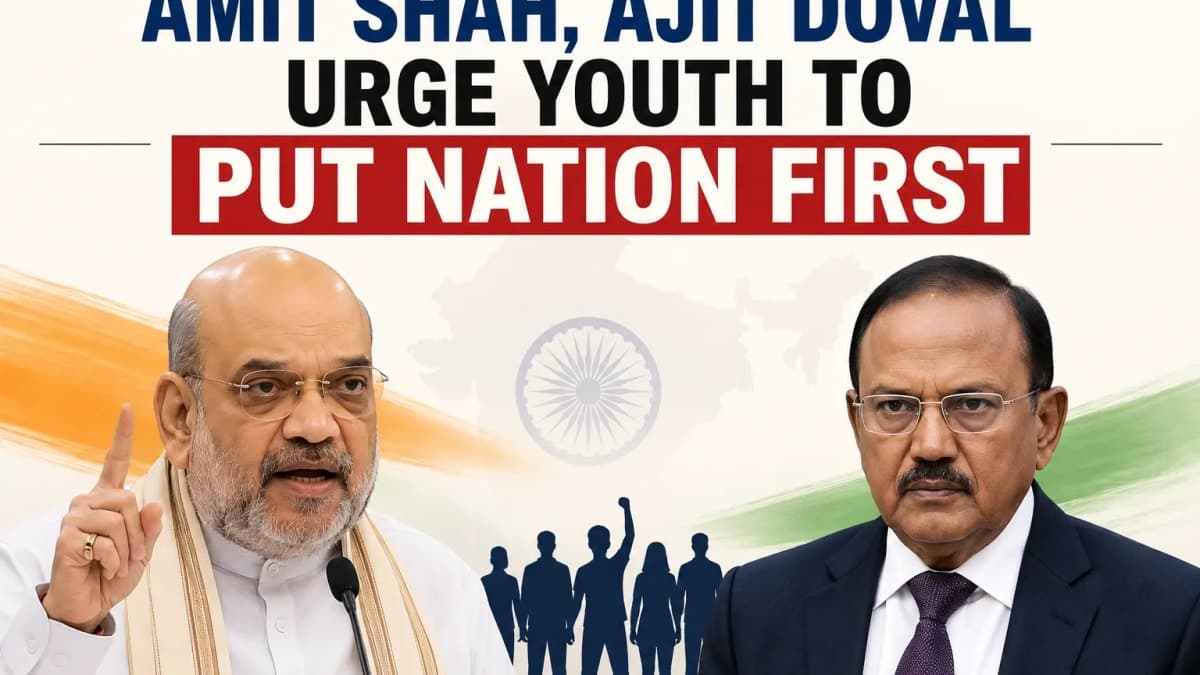
Amit Shah, Ajit Doval Emphasise Nation-First Approach for Youth
Union Home Minister Amit Shah and National Security Adviser Ajit Doval have called upon the country’s youth to adopt a “nation first” approach, underscoring the role young Indians can play in shaping the country’s future.
Their message centred on encouraging younger generations to consider the broader national interest while pursuing their ambitions and contributing to society.
With India having a large young population, discussions around the participation of youth in economic growth, technological development, public service and social progress have become increasingly significant.
Youth Seen as Important to India’s Future
Young Indians are expected to play a major role in determining the country’s economic and social trajectory over the coming decades. From entrepreneurship and technology to education, research, defence and public administration, opportunities for younger generations to contribute to national development span numerous fields.
The appeal from Shah and Doval therefore carries a wider message about connecting individual achievement with the country’s broader development.
A nation-first approach can include fulfilling civic responsibilities, contributing productively to society, respecting democratic institutions and using professional skills to help address challenges facing the country.
Why the Message Matters
The remarks are significant because India’s demographic profile makes young people an important part of its future workforce and leadership.
India’s ability to translate its large youth population into long-term economic and social gains will depend on factors such as education, employment opportunities, skill development, innovation and meaningful participation in public life.
Calls for greater national responsibility can also encourage discussions about what citizenship and public service mean to younger generations.
National Interest and Individual Aspirations
A nation-first message does not necessarily require young people to abandon personal or professional ambitions. Individual success in entrepreneurship, science, technology, education, sports, healthcare and other fields can itself contribute to national development.
The broader challenge is creating an environment in which personal advancement and public interest can reinforce each other.
For policymakers and institutions, this also places responsibility on creating opportunities that enable young Indians to develop their skills, find meaningful employment and participate effectively in the country’s growth.
Balanced Perspective
Appeals to patriotism and national responsibility can have considerable resonance, particularly among young citizens. At the same time, translating such messages into tangible outcomes requires more than rhetoric.
Access to quality education, employment, entrepreneurship opportunities, technological resources and platforms for civic participation can determine how effectively young people contribute to the country.
A balanced nation-building approach therefore involves both encouraging responsibility among citizens and ensuring that institutions provide opportunities for them to participate and succeed.
The Bigger Picture
The message from Amit Shah and Ajit Doval reflects a broader emphasis on involving younger generations in India’s development journey.
As India pursues economic expansion, technological advancement and a greater role on the global stage, the capabilities and choices of its young population will remain crucial.
The call to put the nation first ultimately highlights the idea that India’s long-term progress will depend significantly on how effectively its younger generation combines personal ambition with wider social and national responsibilities.