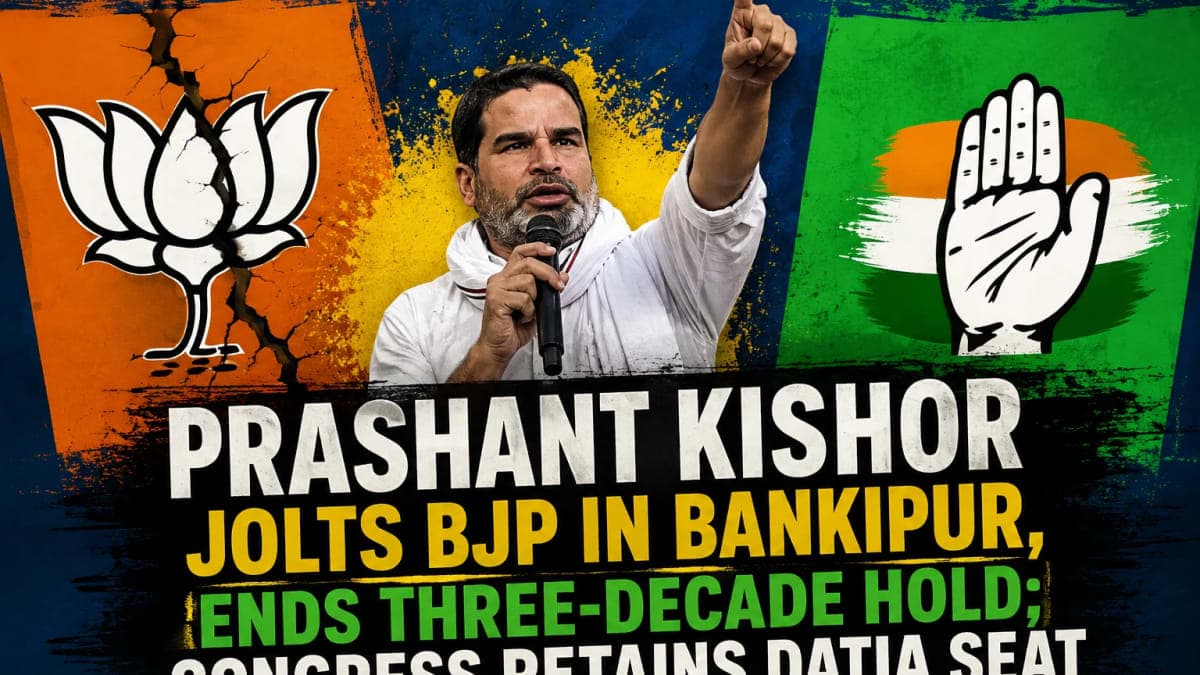
Prashant Kishor Jolts BJP in Bankipur, Congress Holds Datia
The political contest in Bankipur has delivered a notable change, with Prashant Kishor ending the Bharatiya Janata Party’s three-decade hold on the seat. At the same time, Congress has retained Datia, producing two contrasting but politically significant constituency-level outcomes.
The Bankipur result stands out because of the length of the BJP’s hold. A seat remaining under the influence of one party for roughly three decades can develop considerable symbolic importance, making any change particularly noteworthy.
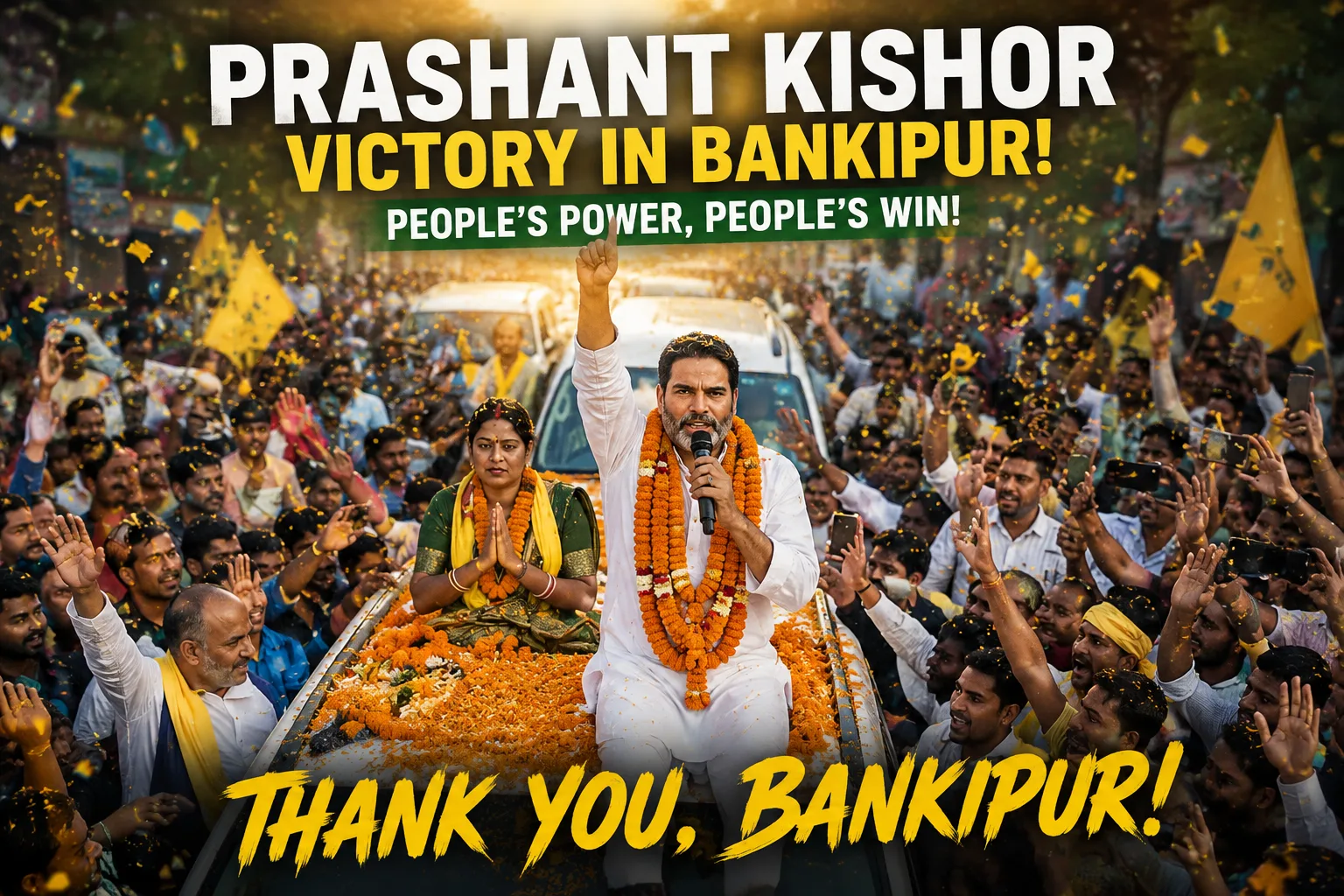
For Prashant Kishor, the outcome represents an important political breakthrough. His association with political strategy has long made him a prominent figure in Indian politics, but a result that disrupts an established party stronghold carries a different kind of significance at the electoral level.
Why the Bankipur Result Matters
Long-standing strongholds are valuable to political parties not simply because of the seat itself, but because they can represent organisational strength, voter loyalty and continuity across multiple election cycles.
Ending such a long run can therefore create questions about whether local political preferences are changing. However, a single constituency result should not automatically be interpreted as evidence of a broader regional or national shift.
Local candidates, constituency-specific issues, campaign organisation and voter priorities can all influence an election independently of larger political trends.
For the BJP, the loss of a seat it had controlled for around three decades could prompt a closer examination of what changed in Bankipur and whether its traditional electoral advantages there remain intact.
Congress Retains Datia
While Bankipur witnessed a change, Datia produced continuity as Congress retained the seat.
Holding an existing constituency can be politically valuable, particularly during an election in which parties are simultaneously trying to defend their established bases and expand into rival territory.
The Datia result suggests that Congress was able to preserve its position in the constituency despite the wider competitive political environment.
Two Seats, Two Different Political Messages
Taken together, Bankipur and Datia demonstrate the highly local nature of electoral politics.
Bankipur represents disruption: a three-decade BJP hold has come to an end. Datia represents continuity, with Congress maintaining control.
These outcomes also illustrate why election results are often better understood constituency by constituency before broader conclusions are drawn. A party can suffer a significant setback in one area while another party successfully protects an existing stronghold elsewhere.
What the Result Means for Prashant Kishor
The Bankipur outcome could strengthen Prashant Kishor’s political standing by giving him a result associated with breaking a long-established BJP hold.
The larger significance, however, will depend on whether this breakthrough can be translated into sustained political momentum. Winning or disrupting one established seat can attract attention, but building a durable electoral presence requires organisation, local leadership and consistent voter support across a wider geographical area.
BJP Faces a Symbolic Setback
For the BJP, losing Bankipur after approximately three decades is likely to carry symbolic weight beyond the numerical loss of a single constituency.
Long-held seats often become benchmarks of organisational stability. Their loss can encourage parties to reassess campaign strategy, voter outreach and changes in the local political environment.
At the same time, it would be premature to treat the Bankipur outcome alone as proof of a wider decline for the BJP. Broader conclusions require results from multiple constituencies and elections.
Balanced Analysis
The Bankipur and Datia outcomes offer important but different political signals.
Prashant Kishor’s success in ending the BJP’s long hold in Bankipur is significant because it breaks an established electoral pattern. Congress retaining Datia, meanwhile, demonstrates its ability to defend an existing seat.
The immediate political narrative is therefore one of both change and continuity. Bankipur could become an important reference point for Prashant Kishor’s political ambitions, while Datia gives Congress a result it can present as evidence of continued local support.
Ultimately, the lasting importance of these results will depend on what follows: whether the Bankipur breakthrough develops into a broader trend, whether the BJP can recover lost ground, and whether Congress can build further momentum beyond Datia.