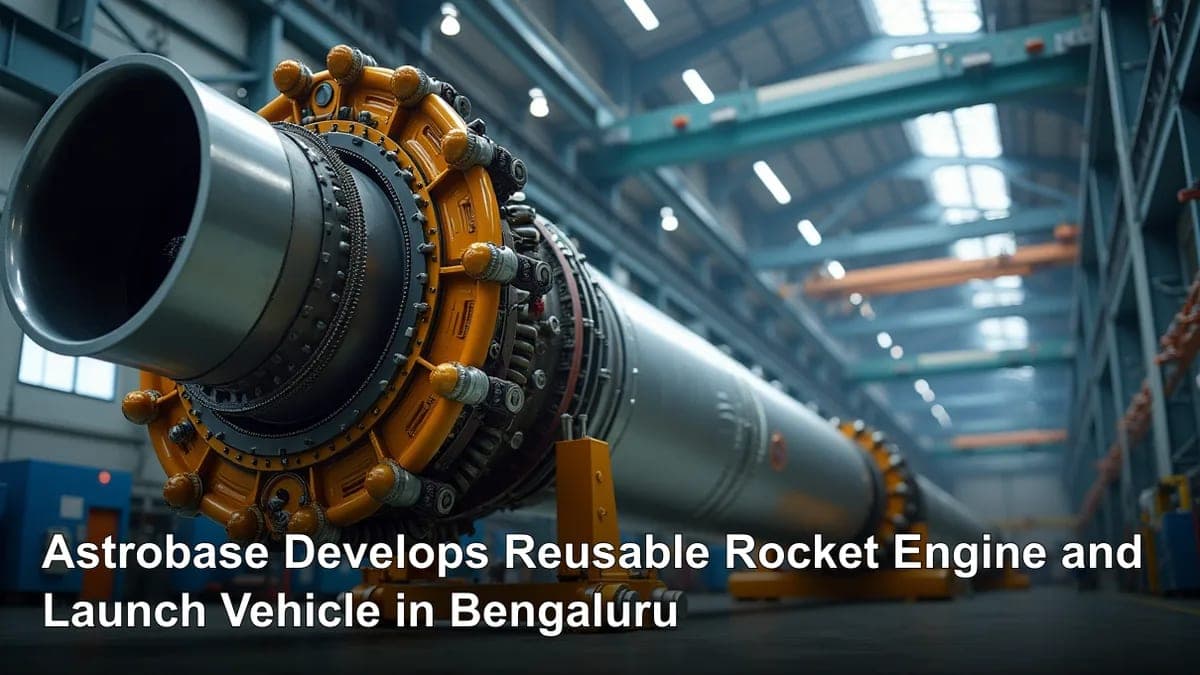
Astrobase, a Bengaluru-based startup, is developing a reusable rocket engine and launch vehicle to cater to the growing demand for orbital slots in India. Founded in 2024 by Neeraj Khandelwal and Devakumar Thammisetty, the company has secured significant funding and government support for its ambitious project.
The Indian Space Research Organisation (ISRO) has a strong record of launching satellites, but its cadence is limited, and the demand for orbital slots is rising faster than the country's ability to reach them. Several private companies have started building launch vehicles to close this gap, with Astrobase aiming at the middle of the payload range.
Astrobase's core technology is a rocket engine that burns methane with liquid oxygen, using a full-flow staged combustion configuration. This engine architecture is considered one of the most demanding and is closely associated with reusable rockets. The company plans to develop three vehicle configurations: fully expendable, partly reusable, and fully reusable, with payloads ranging from three to ten tonnes.
What Happened
Astrobase has made significant progress in developing its rocket engine, with a successful hot-fire test of a sub-scale version in September 2025. The company has also run its turbopumps in January 2026, with results ahead of prediction. Testing is being conducted at a 21.5-acre facility in Anantapur, Andhra Pradesh.
In June 2026, Astrobase was selected as one of the first three recipients of support under the IN-SPACe Technology Adoption Fund, alongside SatSure and TM2SPACE. The scheme covers up to 60% of the project costs for a startup, capped at Rs 25 crore per project. Astrobase's support is tied to technical milestones, with the company aiming to develop an 800 kilonewton engine running on liquid oxygen and methane.
The company has also raised roughly $10 million in its first round, led by Banyan, and has put more than Rs 100 crores into propulsion and manufacturing infrastructure. Astrobase has announced a first European commercial partnership with Impulso Space, covering launch support services for European satellite operators.
Background
Astrobase was founded in 2024 by Neeraj Khandelwal, a co-founder of the cryptocurrency exchange CoinDCX, and Devakumar Thammisetty, a former ISRO scientist. The company is headquartered in Bengaluru, with a propulsion test facility in Andhra Pradesh. Astrobase's sector focus is on launch vehicles and rocket propulsion.
Timeline
2024: Astrobase founded by Neeraj Khandelwal and Devakumar Thammisetty
2025: Successful hot-fire test of sub-scale rocket engine
2025: Astrobase raises roughly $10 million in its first round, led by Banyan
2026: Astrobase selected as one of the first three recipients of support under the IN-SPACe Technology Adoption Fund
2026: Astrobase announces first European commercial partnership with Impulso Space
Why It Matters
Astrobase's reusable rocket engine and launch vehicle have the potential to significantly bridge India's satellite launch gap. The company's focus on autonomous landing and rapid turnaround capabilities could also make it a competitive player in the global launch market.
The development of a reusable rocket engine is a complex and challenging task, with only a handful of companies worldwide having successfully developed such technology. Astrobase's progress in this area is significant, and the company's plans to develop a medium-lift rocket with a first full-scale integrated hot fire expected during 2026 are ambitious.
Industry Impact
Astrobase's success could have a significant impact on the Indian space industry, with the potential to increase the country's satellite launch capabilities and reduce dependence on foreign launch services. The company's focus on reusable technology could also drive innovation and cost savings in the industry.
Analysis
Astrobase's progress in developing a reusable rocket engine and launch vehicle is a significant development for the Indian space industry. The company's focus on autonomous landing and rapid turnaround capabilities could make it a competitive player in the global launch market. However, the development of such technology is complex and challenging, and Astrobase will need to overcome significant technical hurdles to achieve its goals.
Key Takeaways
Astrobase is developing a reusable rocket engine and launch vehicle to bridge India's satellite launch gap
The company has secured significant funding and government support for its project
Astrobase's rocket engine uses a full-flow staged combustion configuration, burning methane with liquid oxygen
The company plans to develop three vehicle configurations: fully expendable, partly reusable, and fully reusable
Astrobase has announced a first European commercial partnership with Impulso Space, covering launch support services for European satellite operators
The company's success could have a significant impact on the Indian space industry, increasing the country's satellite launch capabilities and reducing dependence on foreign launch services
Conclusion
Astrobase's development of a reusable rocket engine and launch vehicle is a significant step forward for the Indian space industry. The company's focus on autonomous landing and rapid turnaround capabilities could make it a competitive player in the global launch market. As Astrobase continues to develop its technology and achieve its milestones, it will be important to watch the company's progress and its potential impact on the industry.
The success of Astrobase and other private companies in the Indian space industry could have a significant impact on the country's ability to launch satellites and reduce its dependence on foreign launch services. As the industry continues to evolve, it will be important to monitor the progress of companies like Astrobase and their potential to drive innovation and growth in the sector.