Flipkart Prepares for Food Delivery Push
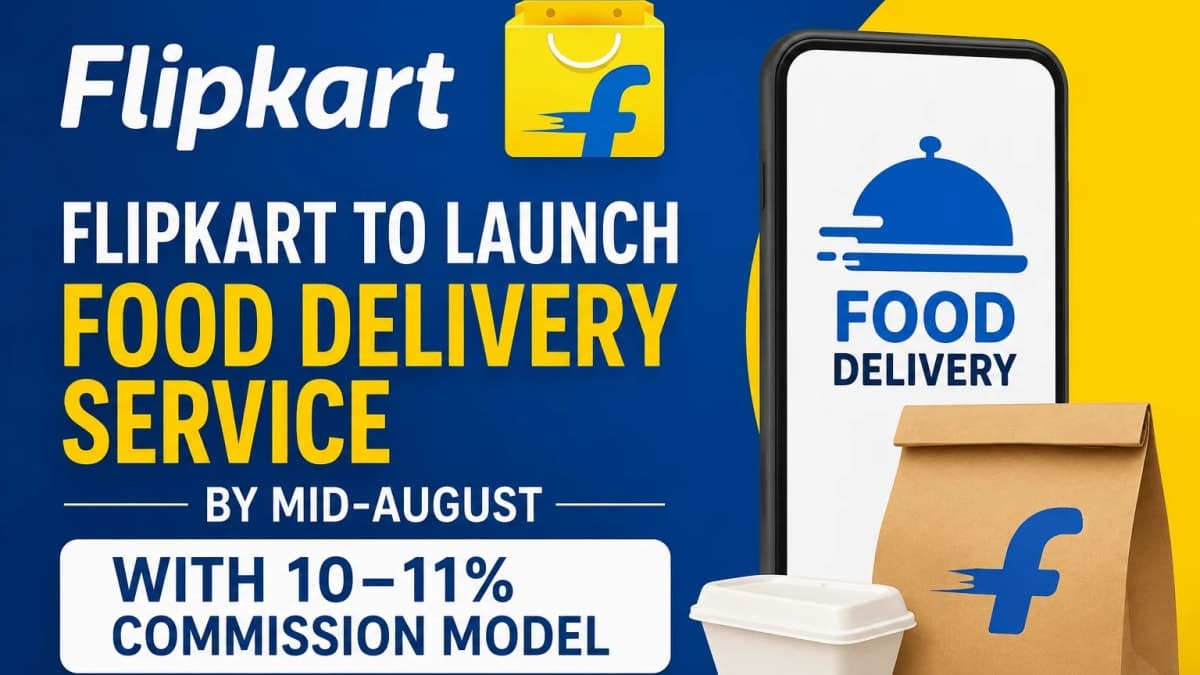
Flipkart is set to expand beyond its core e-commerce operations with plans to launch a food delivery service by mid-August, marking another attempt by a major digital platform to tap into India’s large and highly competitive convenience economy.
The proposed service is expected to adopt a 10–11% commission model, a figure that could become an important part of Flipkart’s strategy for attracting restaurants to its platform.
The move would place the company in a new consumer category where delivery speed, restaurant selection, pricing, logistics and customer loyalty can be just as important as scale.
10–11% Commission Model Could Be a Key Attraction
One of the most notable aspects of the reported plan is the commission structure.
Flipkart is expected to charge restaurants around 10–11% commission under its food delivery model. For restaurants evaluating different online ordering channels, commission costs can directly affect margins and determine how attractive a platform is.
If Flipkart can maintain competitive commissions while generating meaningful order volumes, the proposition could encourage restaurants to experiment with an additional delivery channel.
However, commission rates alone are unlikely to determine the service's success. Restaurants will also consider factors such as customer reach, delivery reliability, payment settlement, promotional costs and the overall economics of fulfilling orders through the platform.
Why Food Delivery Makes Sense for Flipkart
Food delivery differs significantly from conventional e-commerce because purchases can occur much more frequently.
A customer may buy electronics, appliances or fashion products periodically, while meals can generate multiple transactions every week. Entering food delivery could therefore help Flipkart increase the frequency with which consumers interact with its ecosystem.
The expansion could also allow the company to use its existing digital reach and familiarity among Indian online shoppers to promote another consumer service.
For Flipkart, the challenge will be converting that e-commerce recognition into habitual food-ordering behaviour.
Competition Could Intensify
India’s online food delivery industry already has established platforms and deeply ingrained consumer habits. A new entrant therefore needs more than brand recognition to win meaningful market share.
Restaurant availability will be particularly important. Consumers generally expect food delivery apps to offer a broad range of options across cuisines, price categories and neighbourhoods.
Delivery experience will matter just as much. Food is time-sensitive, and delays can quickly affect quality and customer satisfaction.
Flipkart may therefore have to balance restaurant-friendly economics with the significant operational costs associated with maintaining a dependable delivery network.
Restaurants Could Gain Another Distribution Channel
The arrival of another large platform could potentially give restaurants more choice.
Restaurants increasingly rely on digital ordering to reach customers beyond physical dining locations. Having an additional platform could allow businesses to diversify where their online orders originate rather than relying heavily on a limited number of intermediaries.
A commission rate of 10–11%, if implemented as planned and maintained at scale, could become an important competitive tool.
The ultimate benefit for restaurants, however, will depend on the complete cost structure. Advertising charges, discounts, logistics expenses and other commercial terms can be just as important as headline commission percentages.
Why Flipkart's Entry Matters
Flipkart entering food delivery would represent more than the launch of another consumer service.
It would demonstrate how India's major digital commerce businesses are increasingly looking beyond traditional online retail and toward categories capable of generating frequent transactions.
Food delivery offers enormous consumer engagement potential, but it is also operationally demanding. Unlike many conventional e-commerce orders, meals must generally be prepared, collected and delivered within a relatively short period.
That makes execution crucial.
Balanced Analysis: Opportunity Comes With Significant Challenges
Flipkart enters the category with several potential advantages, including a widely recognised brand, a substantial consumer base and experience operating a large digital marketplace.
A competitive commission model could also help the company establish restaurant partnerships during the early stages of expansion.
Yet food delivery is fundamentally different from conventional e-commerce. Building a large restaurant network, ensuring adequate delivery coverage and convincing customers to change established ordering habits could require substantial investment.
There is also the question of long-term economics. Low commissions may attract restaurants, but Flipkart will need to ensure that delivery costs, promotions and customer acquisition expenses do not undermine the sustainability of the model.
For consumers, increased competition could eventually translate into more choices, promotions and service innovation. Restaurants could similarly benefit from greater competition among delivery platforms.
Whether Flipkart can turn those advantages into a sustainable food delivery business will depend on how effectively it executes the service after its planned mid-August launch.