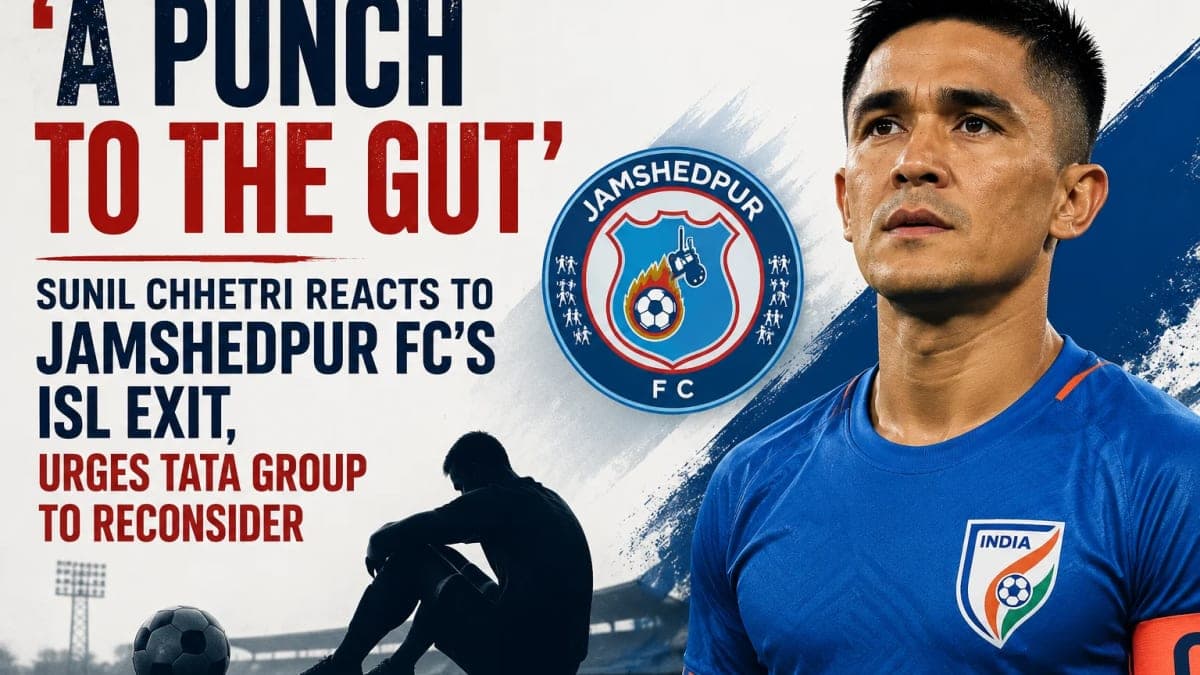
Sunil Chhetri Calls Jamshedpur FC’s ISL Exit ‘A Punch to the Gut’
Indian football great Sunil Chhetri has voiced his disappointment over Jamshedpur FC’s exit from the Indian Super League, calling the development “a punch to the gut” and appealing to the Tata Group to reconsider.
Chhetri’s reaction underlines the significance of the development beyond the fortunes of a single football club. Jamshedpur FC has been associated with one of India’s most prominent corporate groups, while Jamshedpur itself has a longstanding connection with organised sport and football development.
The situation has therefore attracted attention from followers of Indian football concerned about what the club’s departure could mean for players, supporters and the broader domestic football ecosystem.
Chhetri Appeals to Tata Group
Chhetri’s intervention carries particular weight because of his stature in Indian football. Over a long career, the former India captain became one of the country’s most recognisable sporting figures and a prominent voice on issues affecting the game.
By publicly urging the Tata Group to reconsider, Chhetri has placed emphasis on the importance of sustained institutional support for football.
His “punch to the gut” description also reflects the emotional impact that the development has had within sections of the football community.
Why Jamshedpur FC’s Exit Matters
The departure of an established club can have consequences extending beyond league participation.
Professional football clubs support networks involving players, coaches, academy prospects, employees and local supporters. They can also provide young footballers with a visible pathway from grassroots and developmental programmes into professional competition.

For a city such as Jamshedpur, a top-level club can additionally serve as an important connection between the local sporting culture and the national football landscape.
That makes questions about the club’s future relevant not only to its immediate supporters but also to discussions about the sustainability of professional football in India.
Tata Group’s Association With Indian Sport
The Tata name has a long association with sporting development in India. Jamshedpur, in particular, has developed a reputation as an important centre for sporting infrastructure and training.
Against that background, Chhetri’s appeal is notable. His request effectively highlights the role that major institutions and corporate organisations can play in maintaining professional sporting structures over the long term.
At the same time, decisions involving participation in professional leagues can depend on a range of financial, administrative and strategic considerations. Without further confirmed details, it would be premature to attribute the development to any single factor.
A Wider Question for Indian Club Football
The episode also raises broader questions about stability within Indian football.
For any professional league, long-term confidence depends partly on clubs being able to build durable relationships with supporters, sponsors, players and local communities. Uncertainty surrounding established teams can therefore affect perceptions of the wider football ecosystem.
India has spent years attempting to expand the commercial reach and visibility of domestic football. Maintaining sustainable clubs is an important part of that process because supporters need continuity while young players require reliable competitive pathways.
Jamshedpur FC’s situation could consequently become part of a larger conversation about how Indian professional football balances commercial realities with long-term sporting development.
Chhetri’s Intervention Adds Weight to the Debate
Chhetri’s response does not by itself determine what happens next, but his standing within Indian football ensures that the issue receives greater attention.
His appeal to the Tata Group demonstrates how strongly prominent members of the football community can feel when the future of an established club becomes uncertain.
Whether the situation changes will depend on the organisations and stakeholders involved. For now, Chhetri’s reaction has ensured that Jamshedpur FC’s ISL exit is being viewed as more than an isolated club development.
Balanced Analysis: What Comes Next?
From a sporting perspective, retaining established clubs can contribute to continuity, supporter engagement and opportunities for footballers. Jamshedpur FC’s association with a major corporate institution also gives the development symbolic importance.
However, professional clubs operate within financial and administrative realities, and sustainable participation requires more than sporting tradition alone. Any assessment of the decision must therefore take into account factors that have not yet been established in the information available here.
Chhetri’s appeal nevertheless highlights a fundamental challenge facing Indian football: building a professional ecosystem in which clubs can remain competitive, financially sustainable and deeply connected to their communities over the long term.
For Jamshedpur FC supporters, attention will now turn to whether the Tata Group responds to the appeal and whether there is any possibility of reconsidering the club’s ISL exit.