Vinesh Phogat Reacts to Brij Bhushan Singh Judgment
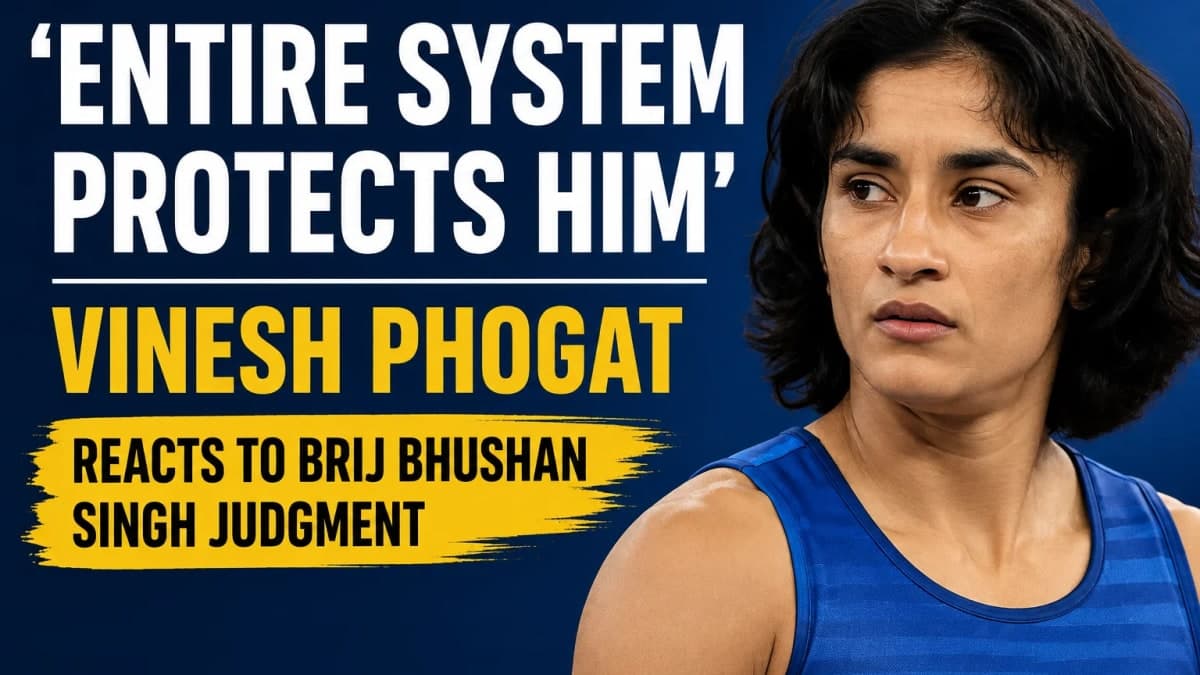
Wrestler Vinesh Phogat has issued a sharp reaction following a judgment involving Brij Bhushan Sharan Singh, saying that the “entire system protects him.”
Phogat’s response reflects her continuing criticism of how the matter involving the former Wrestling Federation of India (WFI) chief has been handled.
Given the limited facts available in the headline, the precise findings and legal implications of the judgment are not being detailed here. Phogat’s statement should be understood as her reaction to the development rather than an established finding about the conduct of institutions or individuals.
‘Entire System Protects Him’
Phogat’s assertion that the “entire system protects him” represents a serious criticism of the institutional response surrounding Singh.
The statement is an allegation and expression of Phogat’s view. It does not, by itself, establish that any institution or authority acted improperly.
Her remarks nevertheless highlight the continuing frustration associated with a controversy that has extended beyond the wrestling community and generated wider discussions about accountability and the treatment of athletes who raise serious complaints.
Background to the Wrestlers’ Protest
Brij Bhushan Sharan Singh, a former president of the Wrestling Federation of India and former parliamentarian, became the focus of a major controversy after women wrestlers levelled sexual-harassment allegations against him.
Singh has denied wrongdoing.
Prominent Indian wrestlers, including Vinesh Phogat, were among those who publicly protested and demanded action. Their demonstrations attracted widespread attention and transformed what began as a dispute within Indian wrestling into a broader national debate.
The controversy raised questions about governance within sporting organisations, athlete welfare and mechanisms available to sportspersons when complaints involve powerful administrators.
Why Vinesh Phogat’s Reaction Matters
Phogat has been one of the most prominent figures associated with the wrestlers’ campaign, making her response to developments in the case particularly significant.
Her latest remarks indicate that the judgment has not ended the broader debate surrounding the controversy.
For athletes and sporting institutions, the case has also highlighted the importance of credible complaint mechanisms and transparent processes for addressing allegations.
Legal Process and Public Reaction
High-profile cases can generate intense public debate, but legal judgments must be distinguished from political reactions and individual opinions about those judgments.
Courts determine matters on the basis of evidence, applicable law and the proceedings before them. Public figures, complainants and other stakeholders may disagree with or criticise judicial outcomes, but such criticism does not alter what a court has formally decided.
Similarly, allegations against an individual should not be presented as established guilt unless determined through the appropriate legal process.
This distinction is especially important in reporting cases involving allegations of sexual harassment.
Wider Questions for Indian Sports
Beyond the individuals involved, the controversy has contributed to a wider conversation about governance in Indian sports.
Athletes often depend on federations and administrators for competition opportunities, training infrastructure and institutional support. That relationship makes independent and accessible grievance mechanisms particularly important.
Sporting bodies consequently face the challenge of ensuring that athletes can raise complaints without fear while also protecting due process and fairness for everyone involved.
Balanced Perspective
Vinesh Phogat’s statement reflects her dissatisfaction with the developments surrounding Brij Bhushan Sharan Singh. Her allegation that the “entire system protects him” is a strong criticism, but it remains her characterization of the situation rather than a judicial finding.
At the same time, the concerns raised by wrestlers have contributed to an important debate about accountability, transparency and athlete protection within Indian sporting institutions.
The judgment and reactions to it are therefore likely to remain part of a wider discussion about how sporting bodies and institutions respond when athletes make serious allegations against people holding positions of authority.