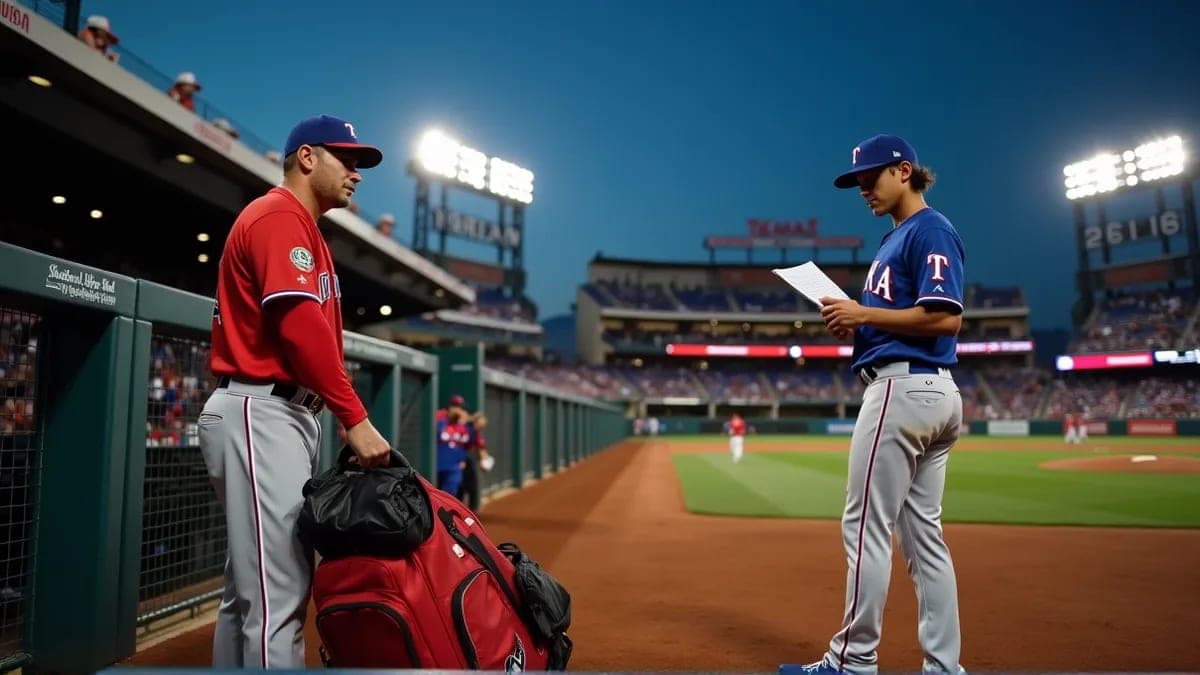
Texas Rangers manager Bruce Bochy entered the final week of the trade deadline with a bullpen that had been stretched thin by injuries and inconsistent performances. The club’s latest move saw veteran right‑hander Chris Martin, a hometown product, removed from the 40‑man roster and a young left‑hander, Adam Macko, added from Toronto.
Understanding the significance of these transactions requires a look back at Martin’s long‑standing relationship with the Rangers and the organization’s recent attempts to rebuild its pitching depth. The decisions reflect both the immediate need for fresh arms and a broader strategy to give younger talent a chance to contribute.
Where Things Stand
Chris Martin, who was reinstated from his third injured‑list stint this season, posted a 9.00 ERA over 14 innings before being designated for assignment on Monday. The right‑hander appeared in 16 games, surrendering 25 hits and 14 earned runs, after missing 75 games due to three separate IL spells.
In contrast, the Rangers secured Adam Macko, a 25‑year‑old left‑hander who debuted in the majors on May 18. Macko compiled a 2‑0 record with a 4.91 ERA across 22 appearances for the Blue Jays before being traded for utility player Josh Smith and minor‑league right‑hander Josh Stephan.
Utility man Josh Smith, a former Silver Slugger winner, struggled this year, hitting .213 with one home run and eight RBIs in 45 games before being optioned to Triple‑A Round Rock after Corey Seager’s activation.
How We Got Here
2018 – Chris Martin makes his major‑league debut with the Texas Rangers.
2019 – Martin spends a second season with the Rangers, establishing himself as a reliable reliever.
May 18, 2024 – Adam Macko records his MLB debut for the Toronto Blue Jays.
2023 – Martin pitches 100 games for the Boston Red Sox, posting a 2.98 ERA.
2024 – Martin returns to the Rangers, posting a 2.98 ERA over 49 relief outings.
June 2026 – Martin turns 40 years old, becoming one of the oldest active relievers in the league.
What Changed And Why
The Rangers’ bullpen entered the summer with a series of setbacks. Martin’s recurring shoulder problems forced three separate stints on the injured list, limiting his availability and eroding his effectiveness. His 9.00 ERA this season underscored a steep decline from the 2.98 ERA he posted the previous year.
At the same time, the organization sought to inject youthful velocity and left‑handed depth. Adam Macko, despite a modest ERA, demonstrated durability and a fastball that sits in the low‑90s, traits the Rangers value in high‑leverage situations.
Josh Smith’s offensive production also fell short of expectations. After a Silver Slugger season in 2024, injuries and health issues—including a glute strain, wrist inflammation, and viral meningitis—limited his impact this year, prompting the club to move him to Triple‑A.
These factors converged to create a roster crunch: a veteran reliever with diminishing returns, a utility player battling health setbacks, and a need for a left‑handed arm. The trade for Macko and the DFA of Martin were logical outcomes of that pressure.
What It Means Now
Designating Martin clears a roster spot, allowing the Rangers to promote a fresh arm from within or to add another veteran if the market offers a better fit. The move also signals to the clubhouse that performance and health will dictate roster security, regardless of tenure.
Adam Macko’s arrival adds a left‑handed option for late‑inning matchups, a commodity that many clubs prize. His experience in Toronto’s bullpen, combined with his age advantage over many rookie relievers, gives Bochy flexibility in how he deploys his bullpen in the final stretch of the season.
The shift also reshapes the Rangers’ depth chart at second base. With Smith now in Triple‑A, the team will likely lean on younger in‑field prospects or consider a short‑term acquisition to cover the position while Seager recovers from his own injury.
What Comes Next
In the weeks ahead, the Rangers will evaluate Macko’s adaptation to the Texas environment and monitor his performance against both left‑handed and right‑handed hitters. If he proves effective, he could cement a role as a bridge reliever or even a set‑up man.
Meanwhile, Chris Martin’s future remains uncertain. As a free agent, he may explore opportunities with clubs seeking veteran depth, but his recent injury history could limit interest. The Rangers, for their part, will likely continue to explore low‑cost, high‑upside pitching options as they aim to solidify a competitive roster for the remainder of the season.
This article is based on reporting published by Livemint.