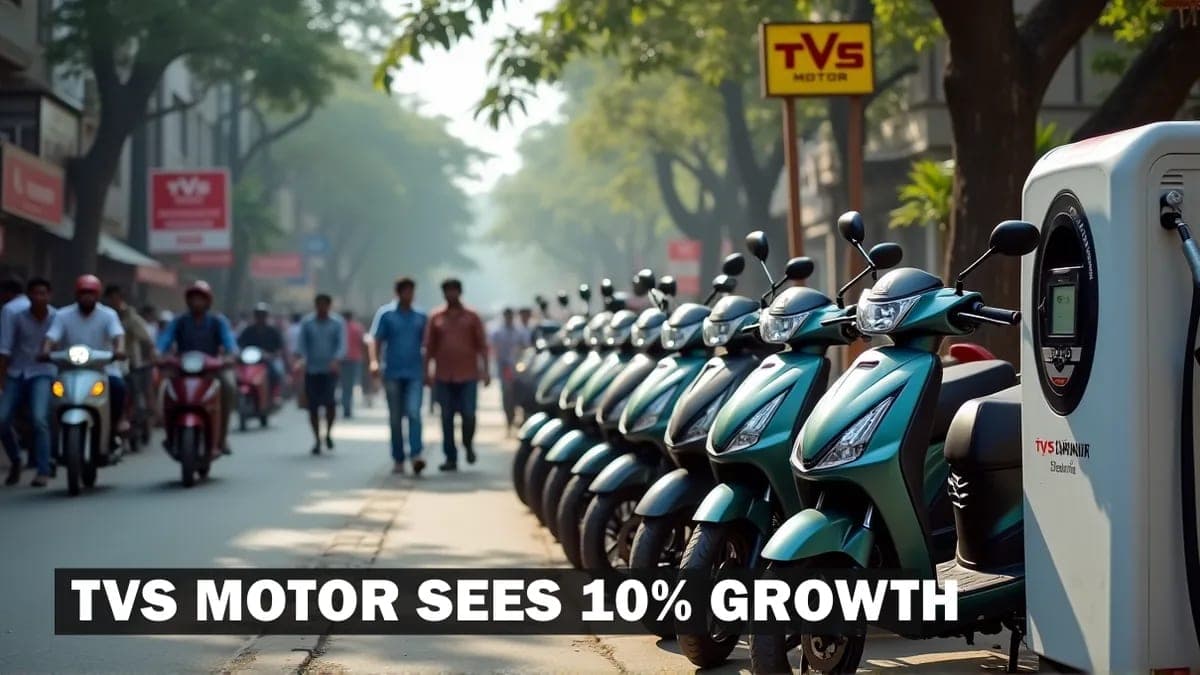
July saw a modest 1.7% month‑over‑month decline in electric‑two‑wheeler (E2W) registrations, with 1.91 lakh units registered compared to 1.94 lakh in June. The dip comes after a sharp slowdown in the second half of last year, but the sector remains on an upward trajectory, posting an 85% year‑on‑year jump to 1.03 lakh units from July 2025. Amid the broader slowdown, TVS Motor stood out, registering 52,032 units – a 10% rise that kept it at the top of the market with a share exceeding 27%.
What Happened
The overall E2W market registered a modest fall, yet the sector’s long‑term growth remains robust. While the total registrations slipped 1.7% MoM, the figure still reflects a strong 85% YoY increase, indicating sustained demand for electric mobility. The dip is part of a broader pattern of volatility that followed a low point of 97,989 units in December of the previous year.
TVS Motor’s 10% sequential rise was a bright spot. The company’s market share climbed above 27%, cementing its position as the largest OEM in the segment. TVS attributed the growth to its expanding product portfolio, including the recent launch of the Orbiter electric scooter in Nepal and a continued push to scale its iQube lineup overseas. In its Q1 FY27 earnings, the firm reported an 86% year‑over‑year surge in electric scooter sales, reaching 1,29,940 units.
Bajaj Auto, the second‑largest player, maintained a steady position with 43,137 units registered in July, a slight dip from June’s 43,504 units. The company’s market share hovered around 22.5% and it announced plans to expand production capacity for its Chetak electric scooter to meet growing demand and support international expansion.
Ola Electric’s performance continued to slide, with registrations falling 19.5% to 13,085 units and its market share dropping to roughly 7%. The startup is grappling with operational and financial headwinds, including multiple insolvency petitions from suppliers and a rise in overdue payments to MSME vendors. The decline follows a strong Q1 FY27 where the company nearly doubled registrations sequentially to 43,719 units, citing operational improvements as the driver.
Rival Ather Energy also saw a 9.2% MoM decline, registering 28,539 units in July compared to 31,435 in June, and holding a 15% market share. The company raised about ₹1,300 cr through a Qualified Institutional Placement earlier this month as part of a planned ₹2,500 cr fundraise to boost R&D, manufacturing expansion, and marketing.
In contrast, several smaller OEMs posted strong sequential gains. Revolt’s registrations rose 27.2% MoM to 1,131 units, while Ultraviolette’s electric superbike saw a 33.7% jump to 647 units. Electric scooter makers such as River, BGauss, Simple Energy, and Kinetic Green also reported MoM growth, indicating that niche players continue to gain traction despite the broader slowdown.
Background
India’s electric‑vehicle ecosystem has been on a growth trajectory for the past few years, driven by government incentives, expanding charging infrastructure, and increasing consumer awareness. In early July, Minister of Road Transport and Highways Nitin Gadkari announced that cumulative EV registrations across all vehicle segments had surpassed one crore, pushing EV penetration beyond 8.5% of the national automobile market.
Why It Matters
The July data underscores the resilience of India’s EV market, even as individual players face challenges. For consumers, the continued growth in registrations signals increasing availability of a wider range of electric scooters and motorcycles, potentially driving down prices through competition. For investors, the sector’s strong year‑on‑year growth and the continued expansion of market leaders like TVS Motor and Bajaj Auto suggest a robust investment case.
From a policy perspective, the sustained growth aligns with the Indian government’s goal of achieving 30% EV penetration by 2030. The recent milestone of over one crore cumulative EV registrations is a tangible step toward that target. Moreover, the continued demand for electric two‑wheelers can support ancillary industries such as battery manufacturing, charging infrastructure, and after‑sales services.
Industry Impact
The market dynamics in July reveal a competitive landscape where established OEMs like TVS Motor and Bajaj Auto maintain dominance while newer entrants such as Ola Electric and Ather Energy face operational hurdles. Smaller OEMs, however, are carving out niches, indicating a fragmented market with multiple growth opportunities. The sector’s overall health also depends on supply chain stability, especially for battery components, as highlighted by the insolvency petitions against Ola Electric.
Key Takeaways
July E2W registrations dipped 1.7% MoM but grew 85% YoY.
TVS Motor’s 10% sequential rise kept it as the market leader with over 27% share.
Bajaj Auto maintained its second‑place position with steady registrations.
Ola Electric’s market share fell to 7% amid financial and operational challenges.
Smaller OEMs like Revolt and Ultraviolette posted strong MoM growth.
Cumulative EV registrations crossed one crore, pushing penetration above 8.5% of the automobile market.
Conclusion
The July data illustrates that while the electric‑two‑wheeler market can experience short‑term volatility, the underlying growth trajectory remains strong. Stakeholders will watch how OEMs navigate supply‑chain pressures, scale production, and leverage policy incentives to sustain momentum. Investors and policymakers alike will be keen to see whether the sector can maintain its upward trend and meet the broader EV penetration targets set for 2030.