India’s Manufacturing Momentum Slows in July
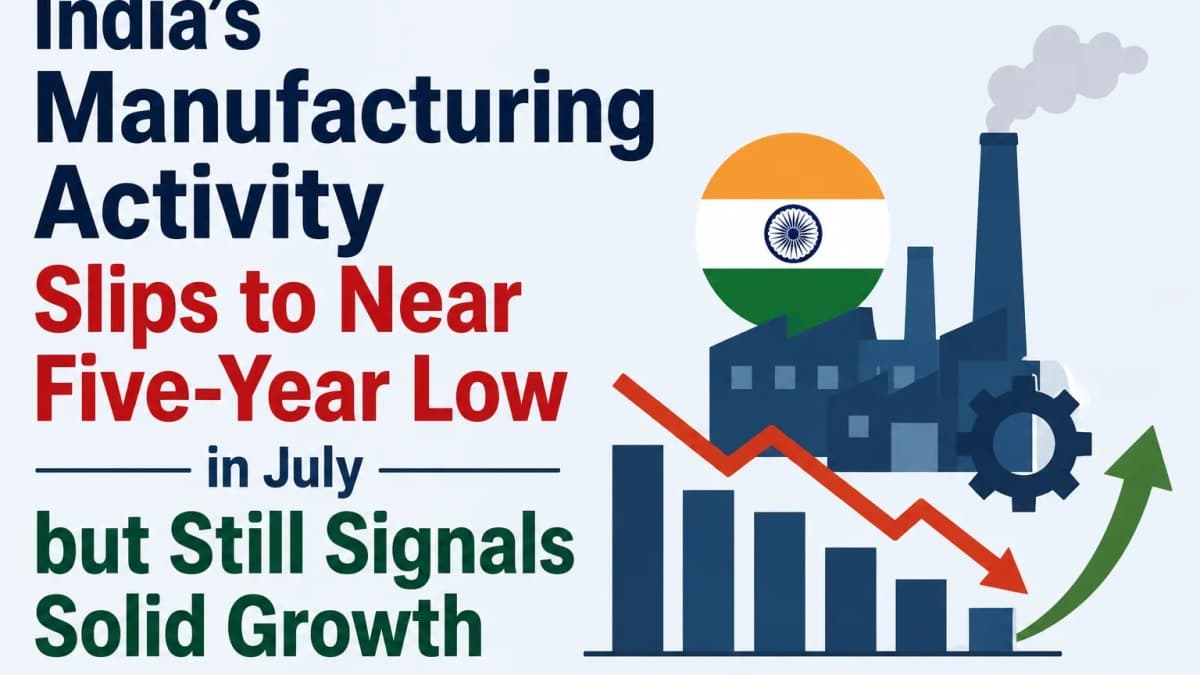
India’s manufacturing sector lost momentum in July, with activity slipping to near its lowest level in almost five years. Despite the slowdown, the latest indication still pointed to solid growth in the sector.
The development presents a mixed picture for one of the key components of the Indian economy.
A decline in the pace of manufacturing activity can raise concerns about business momentum, investment and demand. At the same time, continued growth suggests that the sector has not moved into contraction and retains a degree of underlying resilience.
Near Five-Year Low, but Growth Continues
The July performance stands out because manufacturing activity reportedly approached a five-year low.
However, a slower pace of expansion should be distinguished from an outright decline in manufacturing output or activity.
The headline information indicates that growth remained solid despite the weaker reading. This suggests that manufacturers continued to expand overall, although at a less vigorous pace than previously.
Without the underlying survey figures, it is not possible to determine from the headline alone how individual components such as new orders, production, employment or exports performed during the month.
Why Manufacturing Matters to India
Manufacturing occupies an important position in India’s economic ambitions.
A stronger industrial base can contribute to job creation, exports, investment and the development of domestic supply chains. Manufacturing growth can also support sectors ranging from logistics and energy to financial services and infrastructure.
India has sought to increase its role in global manufacturing as companies reconsider supply chains and diversify production across different markets.
Against that backdrop, monthly indicators of manufacturing activity are closely watched for signs of whether industrial momentum is strengthening or weakening.
Slower Growth Does Not Necessarily Mean Contraction
Economic indicators can sometimes be misinterpreted when a slowdown is described as a decline.
A lower growth reading means the pace of expansion has weakened compared with an earlier period. It does not necessarily mean that the sector itself is shrinking.
That distinction is particularly relevant to the July manufacturing picture.
While activity reportedly fell to near a five-year low, the accompanying signal of solid growth indicates that the sector remained in expansionary territory according to the information provided.
What Could the Slowdown Mean?
A single month of weaker manufacturing activity is not enough to establish a sustained economic trend.
Manufacturing performance can change because of domestic demand, export conditions, input costs, supply-chain disruptions, seasonal factors and business confidence, among other influences.
Determining what specifically drove July’s slowdown would require more detailed data than the headline provides.
The coming months will therefore be important in showing whether the weaker momentum represents a temporary moderation or the beginning of a more persistent slowdown.
Implications for Businesses and the Economy
Manufacturing activity has implications well beyond factories.
Strong industrial expansion can generate demand for transportation, warehousing, raw materials, machinery, financing and other services. It can also influence hiring and capital expenditure decisions.
If manufacturing momentum remains positive, businesses may continue investing in capacity and production. A prolonged slowdown, however, could encourage companies to become more cautious about expansion.
For policymakers, the challenge is to maintain conditions that encourage investment and industrial competitiveness while responding to risks that could weaken demand or production.
India’s Manufacturing Ambitions Remain in Focus
India has placed manufacturing at the centre of its longer-term development strategy, seeking to expand domestic production while strengthening the country’s position in international supply chains.
The country's large consumer market and expanding infrastructure provide potential advantages for manufacturers.
However, sustained manufacturing growth also depends on factors including logistics efficiency, energy availability, access to capital, skilled workers and competitiveness in global markets.
Monthly fluctuations therefore need to be assessed alongside these longer-term structural factors.
Balanced Analysis: Slowdown Warrants Attention, Not Alarm
A near five-year low in manufacturing activity is a development worth monitoring, particularly if weaker momentum continues in subsequent months.
At the same time, the indication that the sector still recorded solid growth provides an important counterbalance.
The July reading should therefore not automatically be interpreted as evidence of a manufacturing downturn.
A clearer assessment will depend on whether future data show renewed acceleration, continued moderate expansion or a deeper loss of momentum.
For now, the headline picture is one of resilience alongside moderation: Indian manufacturing is growing, but its pace appears to have slowed considerably.