Only 6% of Stock-Recommending Finfluencers Are SEBI Registered, Report Warns of Rising Regulatory Challenges
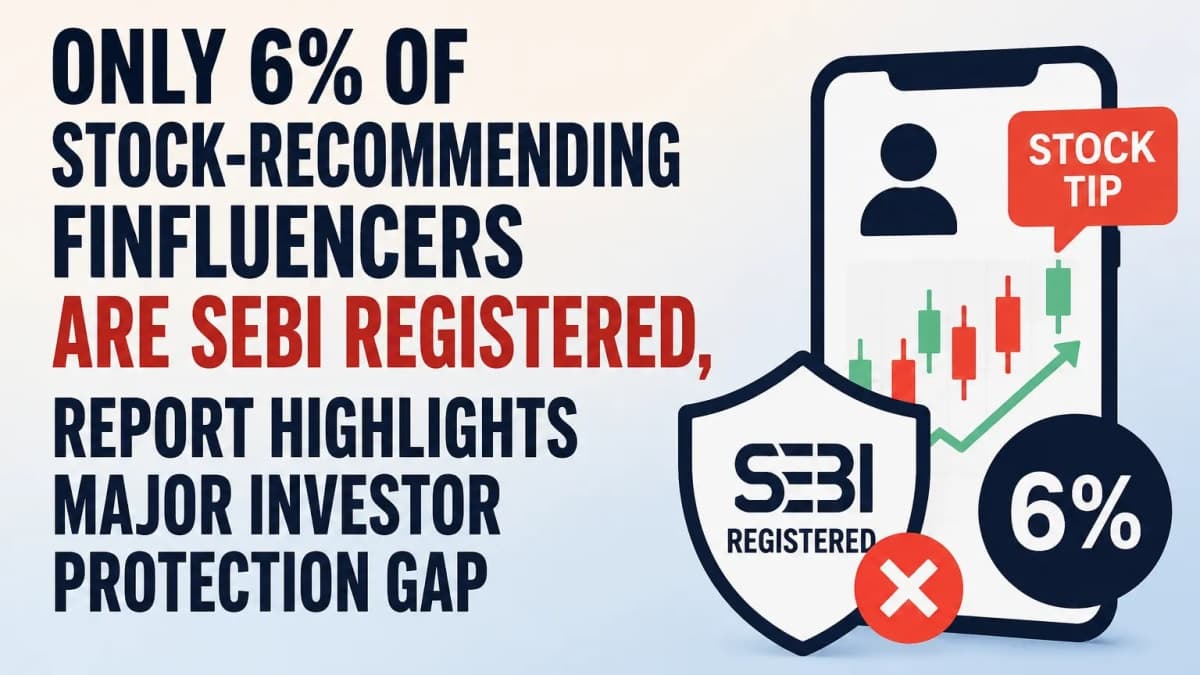
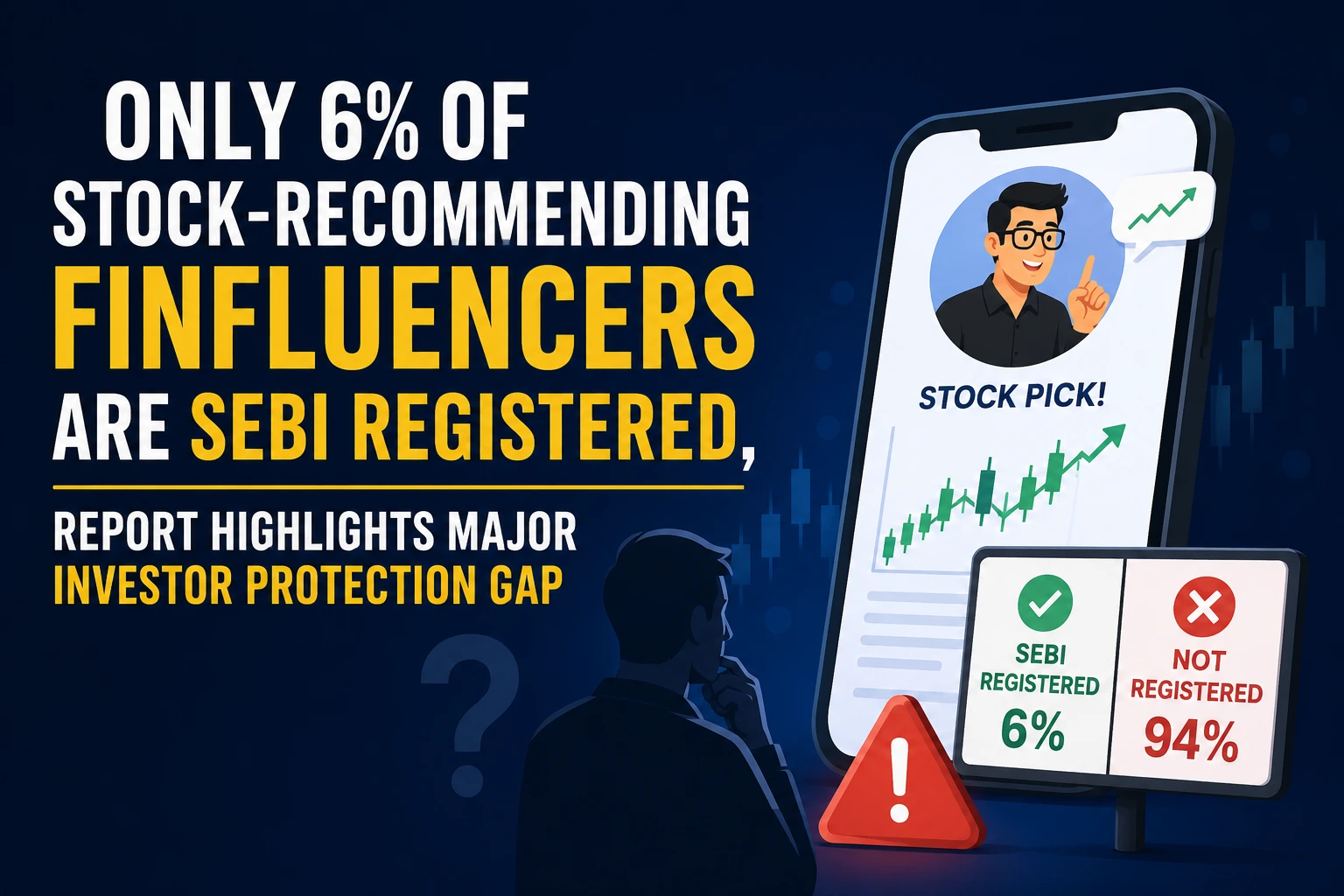
India's rapidly expanding community of financial influencers, popularly known as "finfluencers," is playing an increasingly significant role in shaping investment decisions. However, a recent report has highlighted a widening gap between influence and regulation, revealing that while 33% of finfluencers actively recommend stocks, only 6% are registered with the Securities and Exchange Board of India (SEBI).
The findings underscore growing concerns over the quality and accountability of financial advice circulating across digital platforms. As millions of retail investors turn to social media for market insights, experts believe the absence of regulatory oversight could expose investors to misinformation, conflicts of interest, and high-risk investment decisions.
Social Media Becoming a Key Source of Investment Advice
The popularity of short-form videos, podcasts, and financial content on platforms such as YouTube, Instagram, and X has transformed how many first-time investors learn about the stock market.
Instead of relying solely on traditional financial advisors or brokerage research, an increasing number of individuals now seek recommendations from online personalities who simplify complex financial concepts and discuss market opportunities.
While many creators focus on education and financial awareness, the report suggests that a substantial number also provide stock recommendations despite lacking formal regulatory registration.
Why SEBI Registration Matters
SEBI registration is intended to ensure that investment advisers operate within a regulated framework that prioritizes transparency, ethical conduct, and investor protection.
Registered advisers are generally required to follow compliance standards, disclose conflicts of interest, and adhere to regulatory guidelines. When investment recommendations come from individuals who are not registered, investors may find it difficult to assess the credibility, accountability, or potential commercial interests behind the advice.
The report's finding that only 6% of stock-recommending finfluencers are registered indicates that a large portion of online investment guidance exists outside the formal regulatory ecosystem.
Growing Retail Participation Raises the Stakes
India has witnessed a surge in retail investing over the past few years, driven by easy access to trading apps, digital brokerage platforms, and increased financial awareness.
This expanding investor base has also fueled demand for accessible market commentary. Finfluencers often fill this gap by offering simplified explanations and frequent updates, making investing appear more approachable for newcomers.
However, market experts caution that investment decisions should not rely solely on social media recommendations without independent research or professional advice.
Balancing Financial Education and Investor Protection
The rise of finfluencers presents both opportunities and challenges.
On one hand, creators have helped improve financial literacy by explaining investing concepts in simple language. On the other, promotional content, undisclosed partnerships, and speculative stock tips have prompted regulators worldwide to examine how financial advice is shared online.
The report adds momentum to ongoing discussions around strengthening transparency, improving disclosures, and ensuring that investors can distinguish between educational content and personalized investment recommendations.
Why This Matters
As digital platforms become an increasingly important source of financial information, ensuring the credibility of investment advice has become essential. The report highlights the need for greater investor awareness, stronger compliance mechanisms, and responsible content creation.
For retail investors, the findings serve as a reminder that online popularity should not be mistaken for professional qualification. Verifying whether an adviser is registered with SEBI and conducting independent due diligence remain important steps before making investment decisions.