‘If Modi Is Bringing Development, Why Do You Live Abroad?’ Raj Thackeray Takes Swipe at Vivek Oberoi and R. Madhavan
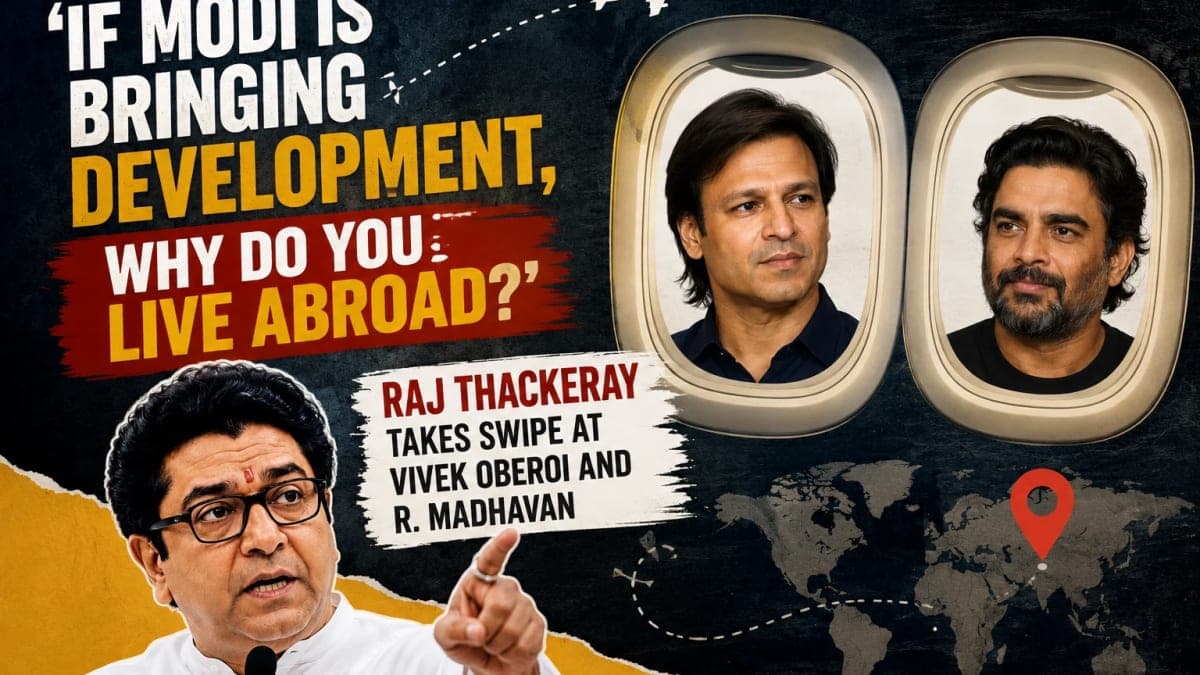
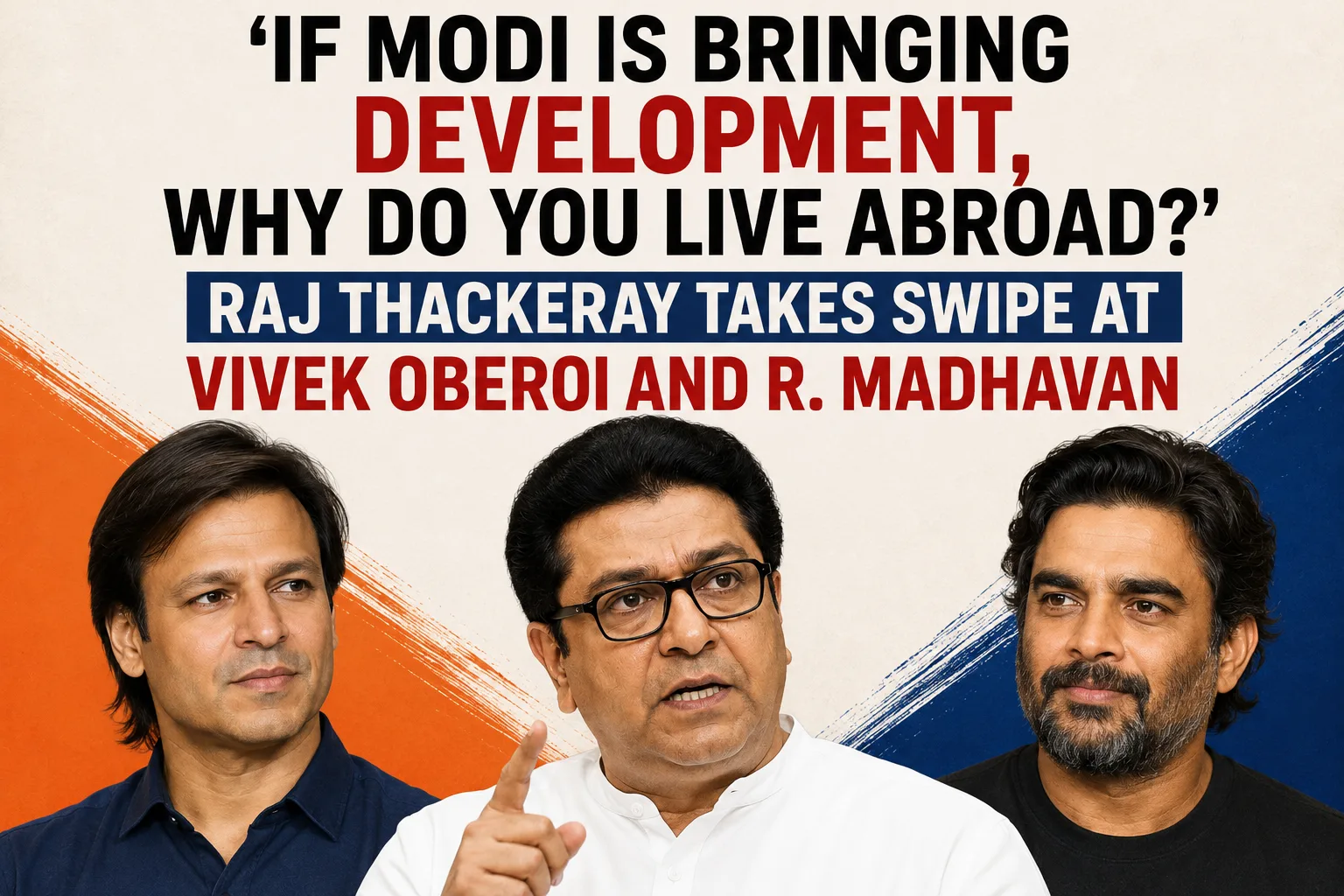
Raj Thackeray has taken a swipe at actors Vivek Oberoi and R. Madhavan, questioning their decision to live abroad while referring to claims of development in India under Prime Minister Narendra Modi.
Thackeray framed his criticism through a pointed question: if Modi is bringing development to the country, why do the two actors live outside India?
The remark brings celebrity choices into a broader political argument over development, governance and how public figures speak about conditions in India.
Raj Thackeray Questions Vivek Oberoi and R. Madhavan
At the centre of the controversy is Thackeray's reference to Vivek Oberoi and R. Madhavan while questioning the narrative surrounding India's development.
His remark essentially juxtaposed two ideas: claims that the country is progressing under Modi's leadership and the choice of prominent personalities to reside abroad.
By using well-known actors as examples, Thackeray turned what could otherwise have been a broad political argument about development into a more direct and attention-grabbing criticism.
However, the headline facts alone do not establish the individual reasons behind either actor's residential choices. Drawing conclusions about those motivations without additional verified information would therefore go beyond what is known from the event.
Development Claims at the Centre of the Remark
Although Vivek Oberoi and Madhavan were directly named, the larger subject of Thackeray's comment was development under Narendra Modi.
Political debates over development often cover a much wider range of issues, including employment, infrastructure, economic growth, investment, public services and living standards.
Thackeray's comment approaches that much larger debate through the choices of individual celebrities.
That makes the statement politically striking, but it also raises a question about whether an individual's decision to live in another country can reasonably be used as an indicator of a nation's overall development.
Why the Statement Matters
The comment has significance beyond the personalities involved because it illustrates how political leaders can use celebrities and their personal decisions to frame broader arguments about governance.
Vivek Oberoi and R. Madhavan are prominent names from Indian cinema, while Narendra Modi is the country's prime minister. Bringing all three into the same political argument gives the statement considerable public resonance.
The episode also highlights the increasingly blurred boundary between celebrity discourse and political debate. The decisions, statements and lifestyles of public figures can become part of political narratives even when those choices may have personal or professional explanations.
Does Living Abroad Reflect a Country's Development?
This is where the argument requires greater context.
A person's choice of residence can be influenced by numerous considerations, including employment, business interests, family circumstances, education, professional opportunities, taxation or lifestyle preferences.
For that reason, living abroad does not by itself demonstrate satisfaction or dissatisfaction with conditions in one's home country.
Similarly, the success or failure of a government's development agenda cannot reasonably be measured through the residential decisions of one or two celebrities.
Development is generally assessed using broader indicators covering areas such as economic performance, infrastructure, income, employment, education, healthcare and quality of life.
Political Messaging Behind the Remark
Thackeray's statement can primarily be understood as political rhetoric designed to question the consistency between praise for India's development and the personal choices of prominent individuals.
Such arguments can be effective politically because they transform a complicated discussion about economic and social progress into a simple question that audiences can immediately understand.
At the same time, simplicity can also be a limitation.
The reasons why an individual chooses to live abroad may have little connection with their assessment of India's development. Without evidence establishing that connection, the example cannot independently prove or disprove claims about the government's performance.
Celebrity Choices Enter Political Debate
Celebrities frequently become part of political conversations because of their visibility and influence.
When actors or other prominent personalities comment on governments, national progress or public policy, their statements can attract far more attention than similar observations made by ordinary citizens.
The reverse can also happen: politicians can use the lifestyles, statements or decisions of celebrities to illustrate a political argument.
Thackeray's reference to Oberoi and Madhavan reflects this dynamic, turning their perceived residential choices into part of a larger discussion about India and development.
Balanced Analysis
There are two distinct questions involved in the controversy.
The first concerns whether government claims about development should be subjected to political scrutiny. In a democracy, challenging the government's record and questioning whether policy claims match people's experiences is a legitimate part of political debate.
The second concerns whether the personal residential choices of celebrities provide reliable evidence for such an assessment.
On that point, greater caution is necessary. Individuals can choose to live in another country for numerous reasons unrelated to their views on the government or India's economic trajectory.
Thackeray's question may therefore function effectively as a political critique, but it should not automatically be treated as a factual measure of India's development record.
A meaningful assessment of development would require broader evidence rather than conclusions based primarily on where particular celebrities choose to live.
Conclusion
Raj Thackeray's swipe at Vivek Oberoi and R. Madhavan has brought a celebrity dimension to the continuing political debate over development under Prime Minister Narendra Modi.
By asking why the actors live abroad if Modi is bringing development to India, Thackeray sought to challenge the broader development narrative through a striking comparison.
The remark is likely to attract attention because of the prominent personalities involved. However, the residential choices of individual actors and the country's overall development performance are separate questions. Without further evidence connecting the two, Thackeray's comment is best understood as a political argument rather than an independent assessment of India's development.