AISA President Neha Says No Apology Over Protest Language
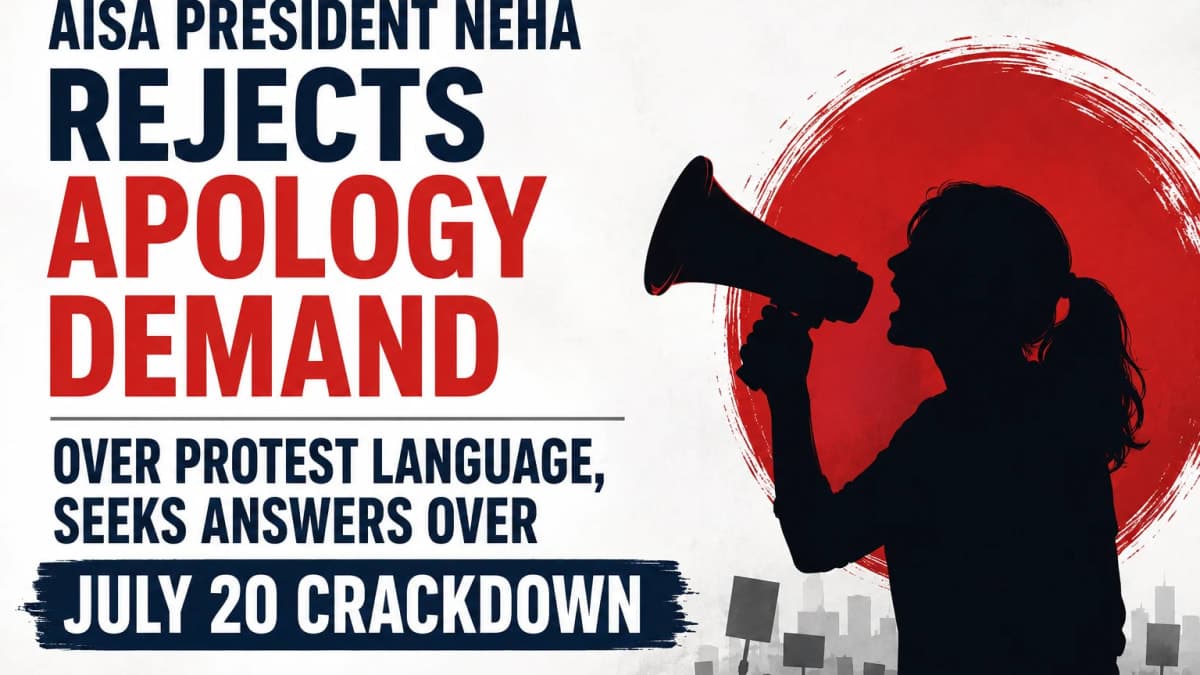
AISA president Neha has rejected the idea of apologising over language used during a protest, while arguing that attention should instead remain on questions surrounding what she described as a crackdown on July 20.
Her position indicates that the controversy remains unresolved, with the dispute extending beyond the words used during the demonstration to the circumstances surrounding the response to the protest.
Neha's remarks effectively frame the issue as one of accountability, insisting that the events of July 20 require answers rather than an apology from protesters over their choice of words.
July 20 Crackdown at Centre of Dispute
The reference to the July 20 crackdown is central to Neha's argument.
By demanding answers over the episode, the AISA president has sought to shift the discussion from criticism of protest rhetoric toward the response faced by demonstrators.
Based on the available headline information, however, details about the circumstances of the crackdown, the authorities involved, the actions preceding it and its consequences have not been specified.
Those details would be necessary to independently assess competing claims surrounding the incident.
Protest Language Sparks Accountability Debate
Language used during demonstrations can become a significant political issue, particularly when slogans or statements are viewed as provocative or objectionable.
Calls for an apology can consequently shift public discussion away from the original reason for a protest and toward questions about how demonstrators expressed their demands.
Neha's refusal indicates that AISA's leadership does not accept that the language controversy should take precedence over its concerns about the July 20 events.
Why the Statement Matters
The disagreement raises a broader question about how democratic protests and official responses to demonstrations should be evaluated.
Protesters have the right to express grievances and challenge institutions, while public debate can also legitimately scrutinise the language and conduct used during demonstrations. At the same time, actions taken against protesters can face scrutiny over whether they were necessary and proportionate.
These issues become particularly important when disagreements over slogans or rhetoric risk overshadowing questions about how a protest itself was handled.
Balanced Analysis
Neha's position keeps pressure on those being asked to explain the July 20 crackdown while making clear that she does not intend to concede ground over criticism of protest language.
However, the two issues do not necessarily have to be treated as mutually exclusive.
Concerns about the language or conduct of protesters can be examined independently of questions surrounding the response to a demonstration. Similarly, criticism of protest rhetoric does not by itself settle whether actions taken during a crackdown were justified.
A complete assessment would therefore require verified information about what occurred on July 20, what preceded the crackdown and how all sides involved responded.
Conclusion
AISA president Neha's refusal to apologise over protest language has kept the controversy alive, while her demand for answers over the July 20 crackdown has placed accountability at the centre of the dispute.
With only the headline facts available, the precise circumstances surrounding the confrontation remain unclear. The broader debate is therefore likely to depend on a fuller account of the July 20 events and the responses of those involved.