
Cyanide, A Secret Affair, And A Buried Skeleton: Inside Jamnagar's Chilling Murder Case
A shocking murder investigation in Gujarat's Jamnagar has emerged after police claimed that a man who had been reported missing nearly two years ago was allegedly poisoned with cyanide and secretly buried beneath the concrete floor of a factory. Investigators allege the crime was carried out by the man's wife and her alleged partner, who are accused of concealing both the death and the victim's whereabouts for an extended period. These remain allegations, and the accused are presumed innocent unless proven guilty in court.
How the Investigation Unfolded
According to police, the victim had disappeared almost two years ago. During that period, family members were reportedly told that he had travelled to Australia for employment, creating the impression that he had voluntarily left the country.
Investigators now allege that the explanation was fabricated to divert suspicion while the victim's body remained hidden beneath the floor of a factory. The alleged concealment delayed the discovery of the crime and complicated the investigation until fresh inquiries led police to uncover the remains.
Police Allegations: Cyanide Used in the Murder
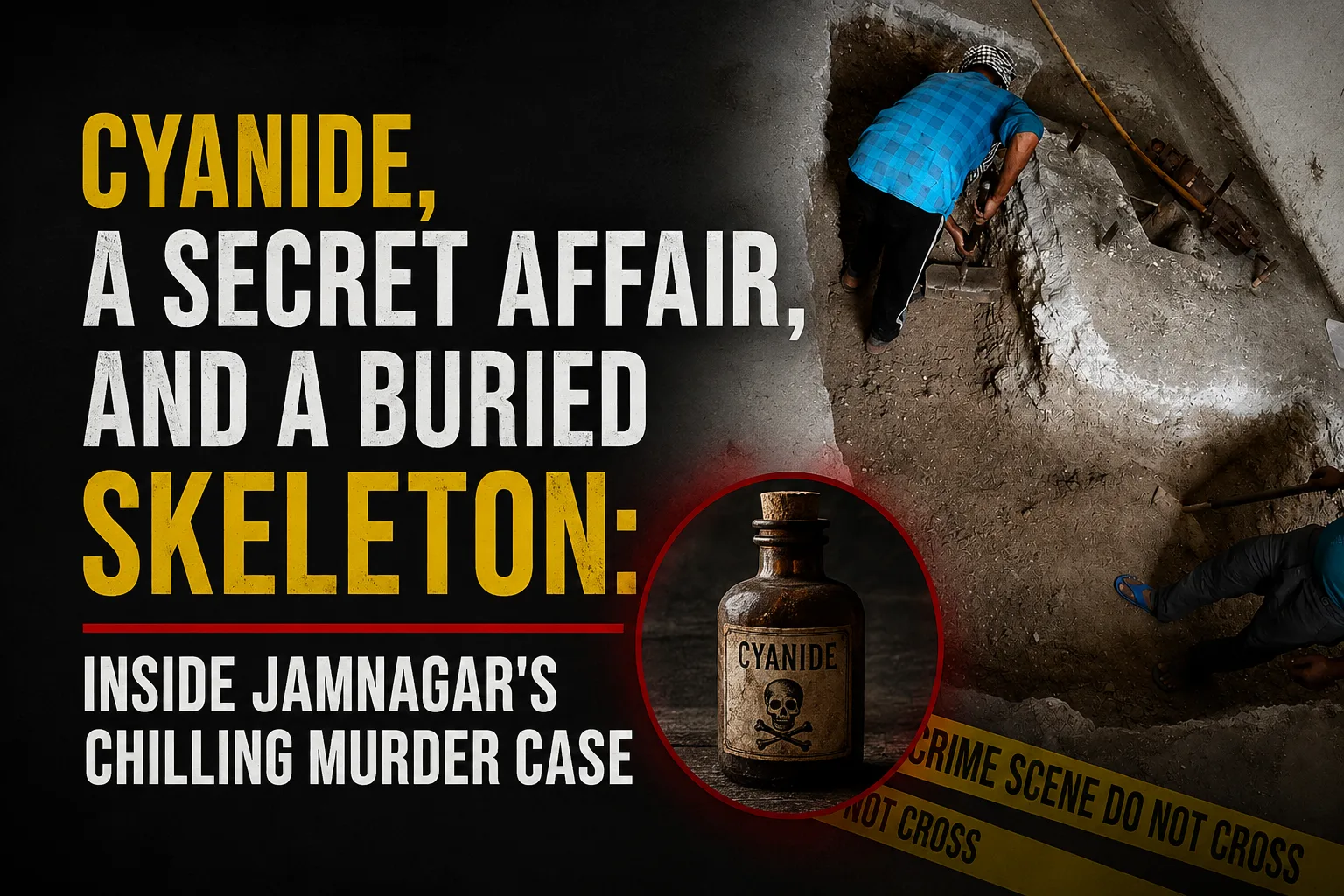
Police claim the victim was allegedly poisoned after cyanide was mixed into an alcoholic drink before his death. Investigators believe the use of poison, followed by the burial of the body under a concrete structure, reflects an attempt to destroy evidence and make the disappearance appear voluntary.
Forensic examination and excavation of the burial site are expected to play a crucial role as investigators seek scientific evidence to support the allegations made during the investigation.
Alleged Affair Forms Part of the Motive
Investigators have indicated that an alleged extramarital relationship between the accused individuals is among the motives being examined. Police suspect the alleged relationship influenced the events leading up to the victim's disappearance and death.
However, investigators continue to examine multiple aspects of the case, and the precise motive will ultimately be determined through the judicial process and the evidence presented before the court.
Why the Case Matters
The Jamnagar investigation highlights how unresolved missing-person cases can sometimes conceal serious crimes that remain undiscovered for years. It also demonstrates the growing importance of forensic science, excavation techniques, and detailed investigative work in solving cases where evidence has been intentionally hidden.
The case has also renewed discussion about the need for sustained review of long-pending missing-person investigations, particularly where inconsistencies emerge in witness accounts or communication with family members.
Balanced Analysis
While the allegations have attracted significant public attention due to their disturbing nature, the criminal justice process requires that guilt be established through admissible evidence rather than public opinion. Forensic reports, witness testimony, digital evidence, and investigative findings will be central to determining the facts.
Legal experts note that cases involving concealed remains and alleged poisoning often depend heavily on scientific examination and circumstantial evidence. As the investigation progresses, authorities are expected to gather additional material before prosecution advances.
Until a court reaches its conclusion, the allegations remain under investigation, and the accused retain the legal presumption of innocence.
Background
India has witnessed several complex murder investigations in recent years where missing-person complaints eventually evolved into homicide cases following forensic breakthroughs. Advances in forensic science, DNA testing, digital evidence recovery, and excavation methods have increasingly helped investigators uncover crimes that remained hidden for extended periods.
The Jamnagar investigation is another reminder of how sustained police work and forensic analysis can reshape seemingly unresolved disappearance cases into major criminal investigations.