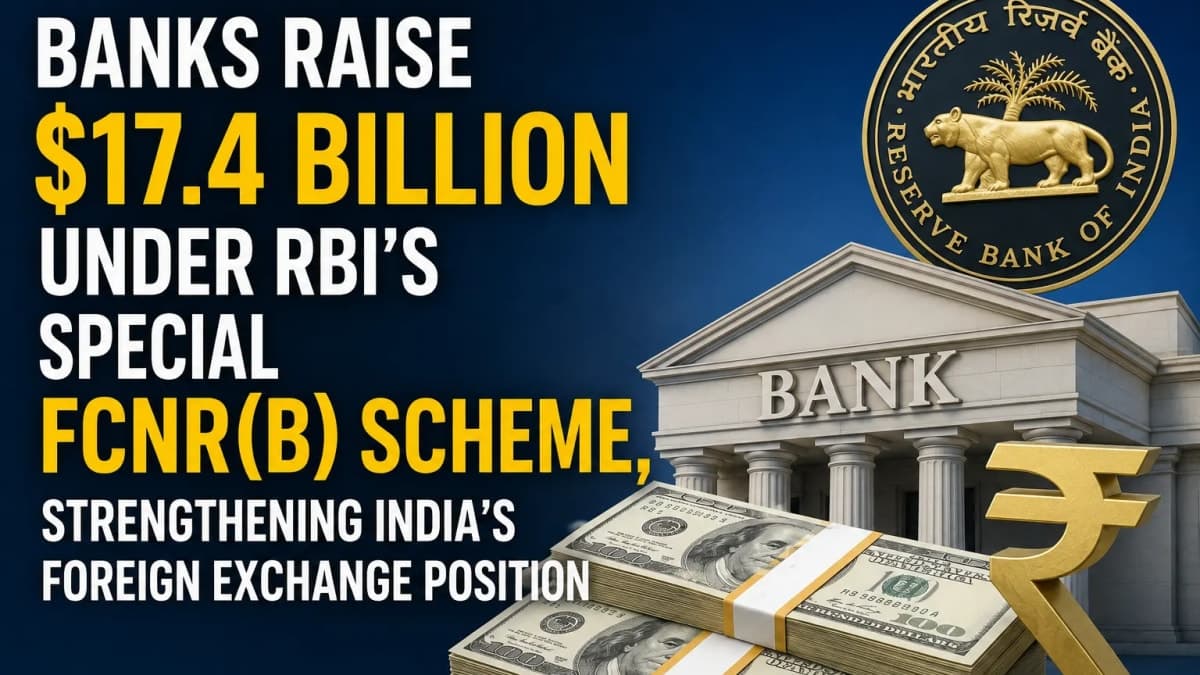
RBI's Special Deposit Window Sees Strong Response
Indian banks have successfully mobilised approximately $17.4 billion through fresh Foreign Currency Non-Resident (Bank), or FCNR(B), deposits under the Reserve Bank of India's special incentive programme.
The figures released by the RBI show that these deposits account for the majority of the $20.72 billion in total foreign currency inflows generated under the central bank's special measures introduced in June to strengthen India's balance of payments and support foreign exchange reserves.
Multiple Funding Channels Add to Forex Inflows
Apart from FCNR(B) deposits, banks also mobilised funds through other overseas financing routes.
According to RBI data, Overseas Foreign Currency Borrowings (OFCBs) contributed nearly $1.97 billion, while External Commercial Borrowings (ECBs) added around $1.34 billion, taking the combined inflow under the programme to over $20.7 billion as of July 17.
The RBI said the concessional swap facility has attracted steady participation since becoming operational, with authorised dealer banks reporting sustained inflows from eligible overseas investors and depositors.
Why the RBI Introduced the Scheme
The Reserve Bank announced the special measures in early June to encourage foreign currency inflows at a time when global uncertainties, elevated crude oil prices and external market volatility were placing pressure on emerging-market currencies.
Under the scheme, the RBI provides a concessional swap facility that reduces hedging costs for banks raising eligible foreign currency deposits and borrowings. The lower cost enables banks to offer more attractive returns to non-resident Indians while strengthening India's foreign exchange resources.
The FCNR(B) deposit window is scheduled to remain open until September 30, while the facilities covering OFCBs and ECBs will continue through December 31.
Background
Foreign Currency Non-Resident (Bank) deposits allow NRIs to place fixed deposits in designated foreign currencies with Indian banks without assuming exchange-rate risk on the principal amount.
The RBI has previously used similar measures during periods of external financial pressure, most notably in 2013, when a comparable programme helped attract substantial overseas deposits and stabilise India's external account.
The latest initiative comes as the central bank seeks to maintain adequate foreign exchange reserves and strengthen confidence in India's external sector amid an uncertain global economic environment.
Why the Development Matters
The strong response indicates continued confidence among overseas Indians and international investors in India's banking system and macroeconomic outlook.
Higher foreign currency inflows improve the country's balance of payments, strengthen forex reserves and provide the RBI with greater flexibility in managing currency volatility if global financial conditions become more challenging.
The mobilisation also reduces dependence on short-term capital flows by encouraging relatively stable deposit-based funding from NRIs.
Balanced Analysis
The robust inflows represent an early success for the RBI's policy intervention, with FCNR(B) deposits emerging as the largest contributor to the programme.
Supporters argue that stronger foreign currency reserves enhance financial stability, improve investor confidence and provide a buffer against external shocks. They also note that concessional swap facilities can attract long-term overseas funds without significantly disrupting domestic liquidity.
However, some economists caution that these measures are temporary in nature and should complement—not replace—long-term structural improvements in exports, foreign direct investment and domestic productivity. They also note that sustaining external resilience will depend on broader macroeconomic factors, including oil prices, global interest rates and capital market conditions.
Even so, the encouraging response suggests that the RBI's strategy has successfully attracted meaningful overseas capital during the initial weeks of the programme, strengthening India's external financial position.